Bhutan's living culture, up close
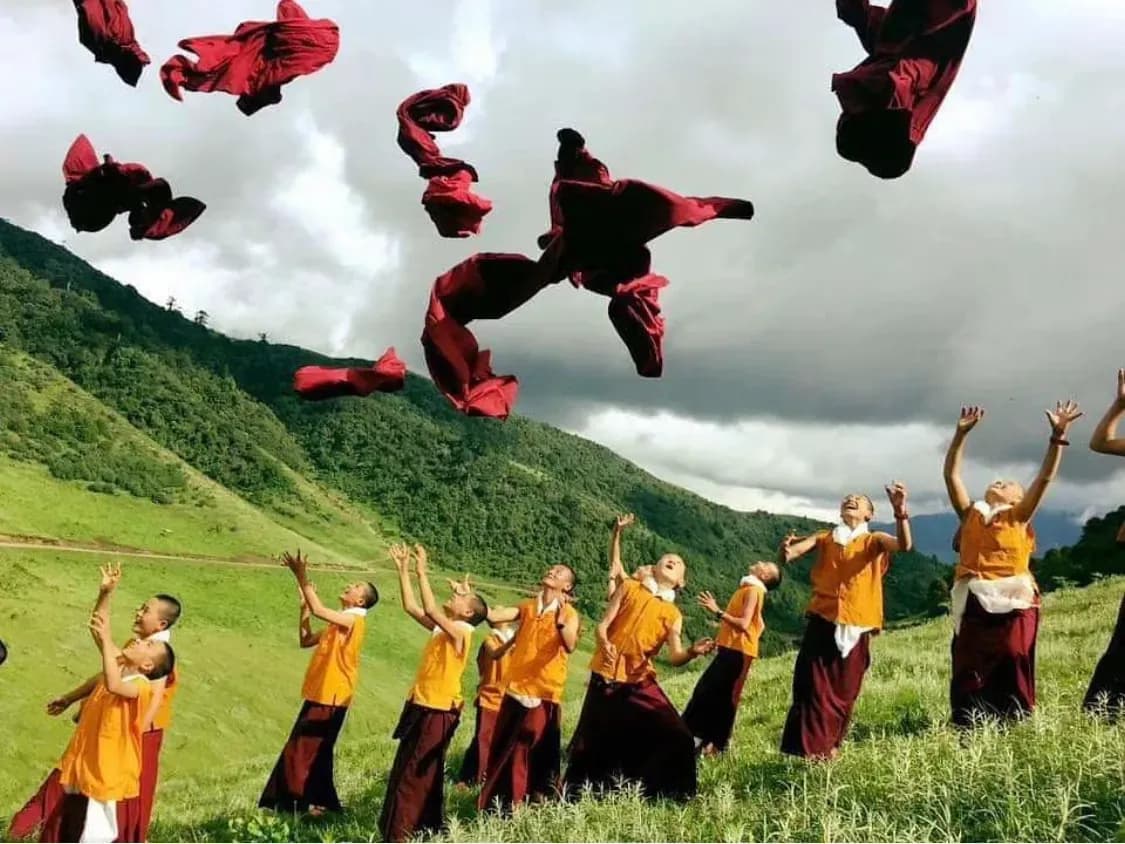
Bhutanese culture is not a museum piece. It is lived every day. Shaped by Mahayana Buddhism and centuries of chosen isolation, it shows in the dzongs that still house monks and government, the gho and kira people wear to work, and the masked dances of the Tshechu festivals. Our private cultural tours take you inside it, with a local guide to explain what you are seeing.
Best time
March–May and September–November, when the major Tshechus take place.
Why Bhutan
Why Bhutan for culture
Dzongs still in use
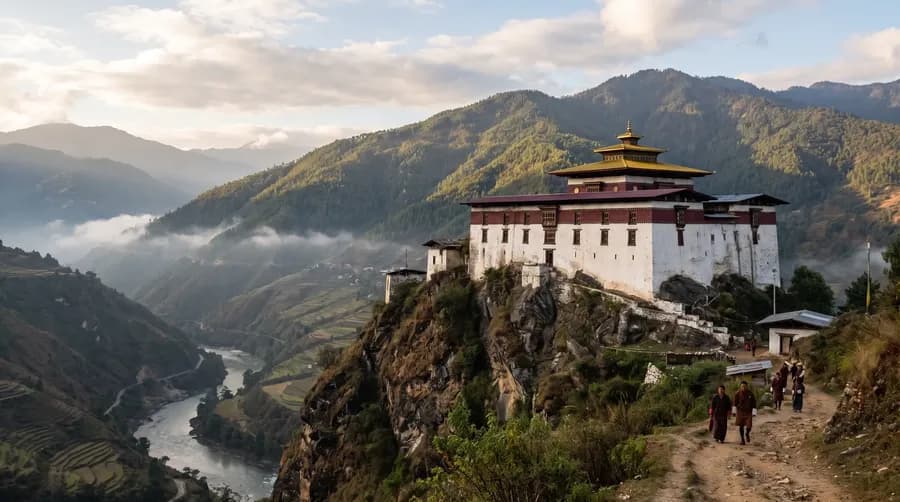
Bhutan's great fortress-monasteries, like Punakha Dzong and Paro's Rinpung Dzong, are working buildings, half monastery and half district government, raised by master builders without drawn plans or nails.
Festivals for everyone
At a Tshechu, whole valleys gather in their finest clothes to watch sacred mask dances. Paro's in spring and Thimphu's in autumn are the best known.
Culture as policy
Preserving culture is one of the pillars of Gross National Happiness, Bhutan's development philosophy, which is why tradition here feels so alive.
Time in a family home
On a farmhouse visit or homestay you can help milk cows and churn butter, cook ema datshi, and try archery, the national sport, with your hosts.
Cultural highlights
What you'll experience
Paro · 3,120 m
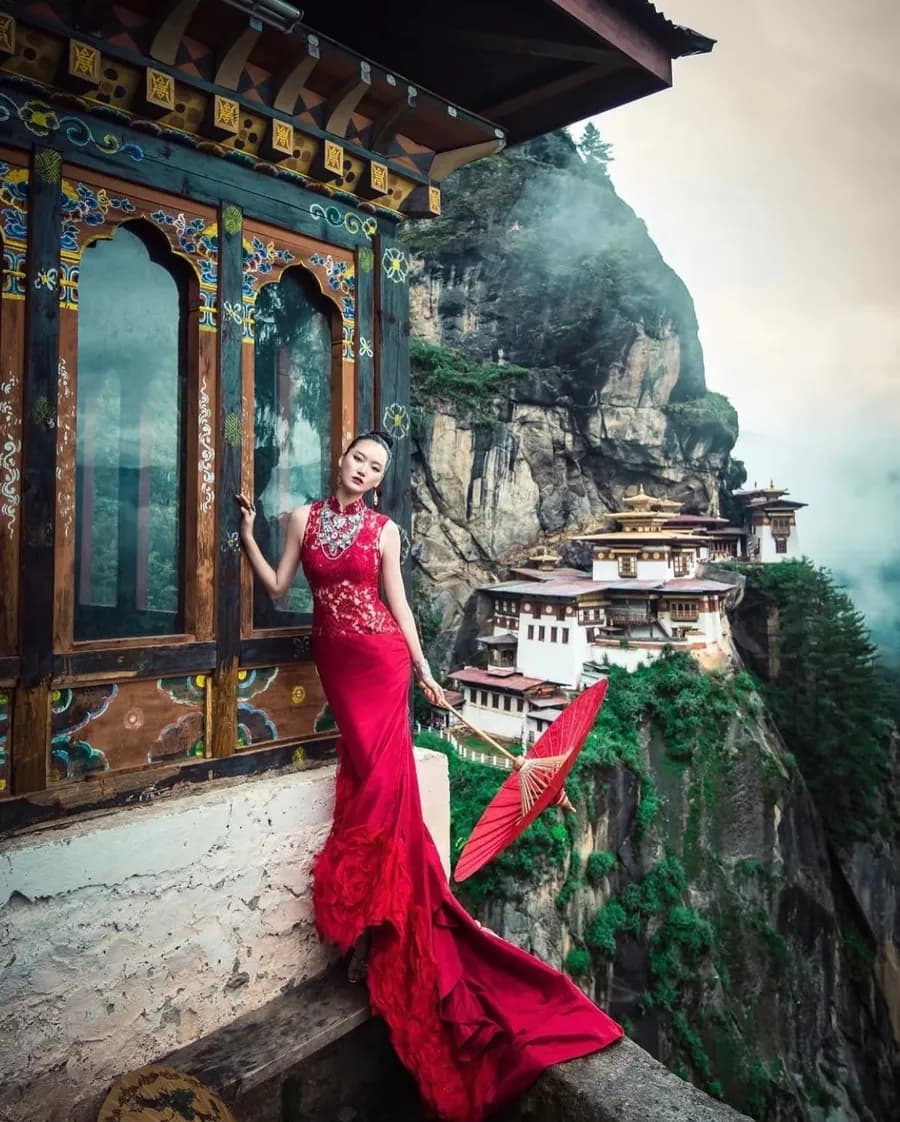
The Tiger's Nest
The cliffside monastery where Guru Rinpoche is said to have meditated, and the hike every visitor remembers.
ExplorePunakha · built 1637–38
Punakha Dzong
The 'palace of great bliss' at the meeting of two rivers, winter home of Bhutan's central monk body.
Spring & autumn
Tshechu festivals
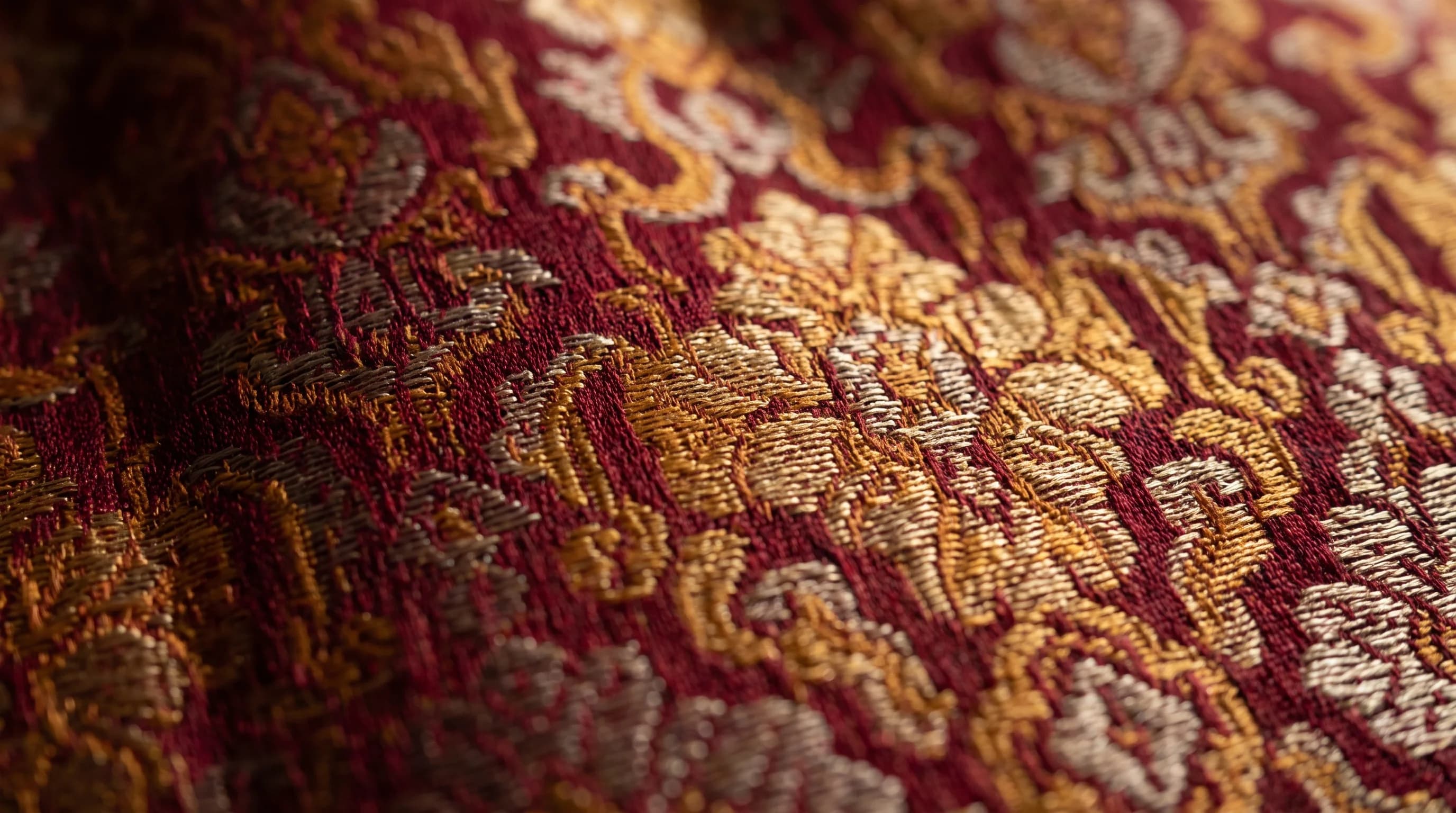
Sacred mask dances, clowning atsaras and the dawn unveiling of a giant thongdrel tapestry.
ExploreWestern & eastern valleys
Farm homestays
A night with a Bhutanese family: home cooking by the fire, butter tea and village life up close.
Thimphu
The thirteen arts
Painting, woodcarving, weaving and more at the Institute for Zorig Chusum, where young artisans keep the crafts alive.
Everywhere
Archery
Bhutan's national sport, played with song, dance and friendly insults. You're welcome to try.
Bhutan cultural tours FAQs
Your questions, answered
Still wondering about something? Ask our Thimphu team directly. We're happy to help.
Ask us on WhatsAppIts living Buddhist traditions: fortress-monasteries (dzongs) still in daily use, sacred mask-dance festivals called Tshechus, national dress worn every day, and a development philosophy (Gross National Happiness) that puts cultural preservation first.
Our 7-Day Authentic Bhutan covers Paro, Thimphu, Punakha and the Phobjikha valley, with the Tiger's Nest hike. It's the classic first cultural journey.
Yes. If your dates allow, we time your tour around a Tshechu. See our festival calendar for 2026 and 2027 dates.
Long sleeves and long trousers or skirts, no hats inside, and shoes off where asked. Your guide will help with local etiquette.
Do dress modestly at religious sites, walk clockwise around temples and chortens, and ask before photographing people. Don't point your feet at altars or touch religious objects, and don't smoke in public places, where it is banned. More in our Bhutan dress code and etiquette guide.
Chillies are a vegetable, not a spice: the national dish is ema datshi, chillies in cheese, served with red rice. Try kewa datshi (potatoes and cheese), momos, buckwheat dumplings in Haa and butter tea. Hotels also offer milder dishes. See our guide to Bhutanese food.
Begin your journey
Let's design your Bhutan
Tell us a little about the trip you're dreaming of. A real travel specialist in Thimphu (not a call centre) will reply within a day with ideas and an honest, all-inclusive price.
Send an enquiry
No obligation. It's just the start of a conversation.