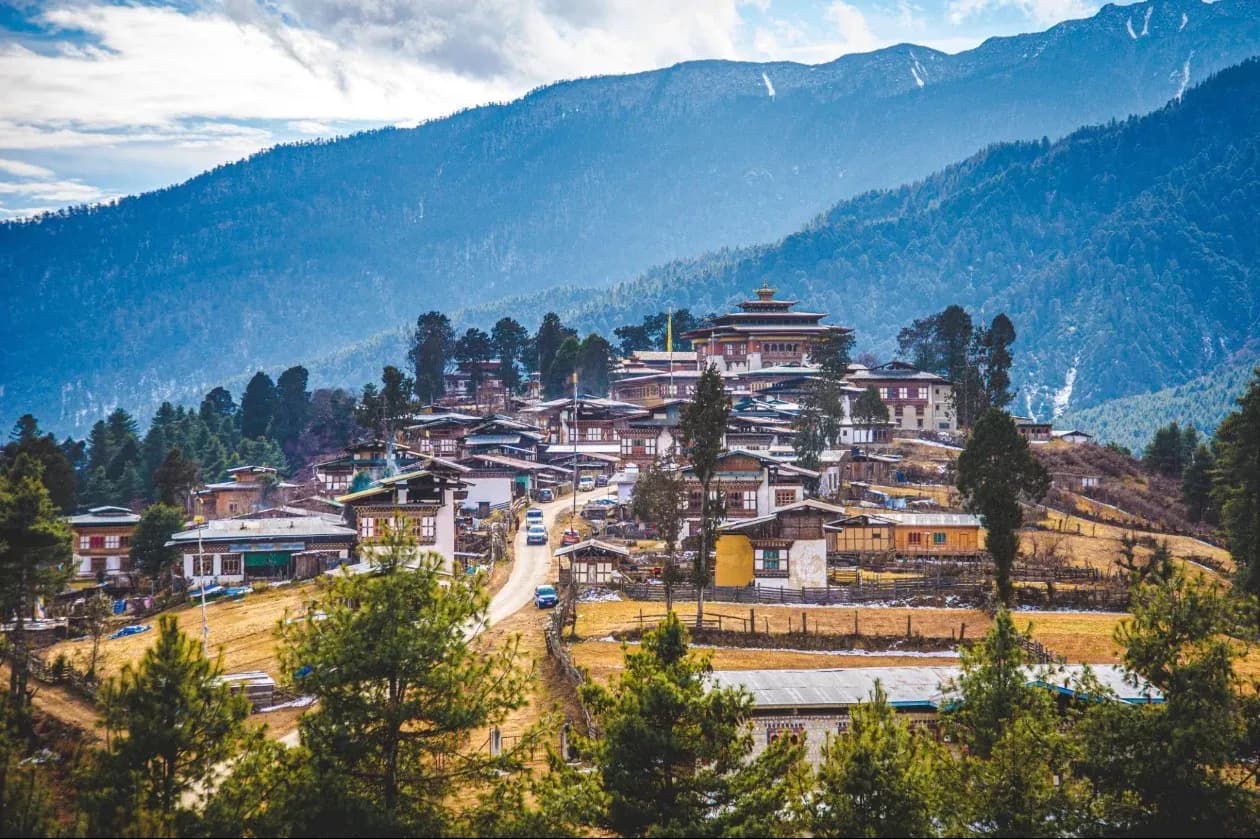
Phobjikha Valley, home of the cranes
Phobjikha (also called Gangtey) is a wide, glacial valley at about 3,000 m on the edge of the Black Mountains, around three hours' drive from Punakha. From late October to February it is the winter home of the rare black-necked crane; year-round, it offers quiet walks, farmhouse stays and the 17th-century Gangtey Monastery.
- Altitude
- About 3,000 m
- From Punakha
- About 3 hours
- Cranes
- Late Oct to Feb
- Time needed
- 1–2 nights
About Phobjikha Valley
Phobjikha is one of the most beautiful valleys in Bhutan: a broad bowl of marshland and pasture ringed by forest, with scattered farmhouses and potato fields. It is a protected area, and to keep the cranes safe the valley's power lines were laid underground.
The cranes fly in from the Tibetan plateau each autumn and circle the monastery three times on arrival, local people say, before landing in the marsh. Their return is celebrated with a festival every November.
Things to do in Phobjikha Valley
- 1
Black-necked cranes
Several hundred of these rare, elegant cranes roost in the marsh in winter. Watch them at dawn or dusk from the valley edge. Your guide will know the best spots.
- 2
Gangtey Monastery
Gangtey Goenpa, founded in 1613, crowns a ridge above the valley. It is the main seat of the Nyingma tradition in western Bhutan, with a community of monks and a fine central tower.
- 3
Gangtey Nature Trail
An easy walk of about 1.5 to 2 hours from the monastery down through pine forest and meadows to the valley floor. It's one of the loveliest short walks in the country.
- 4
Crane Information Centre
Run by the Royal Society for Protection of Nature, with spotting scopes and an introduction to the cranes and the valley's conservation.
- 5
Farmhouse stay
Spend a night with a family in a traditional farmhouse, with buckwheat pancakes, butter tea and a wood-fired stone bath.
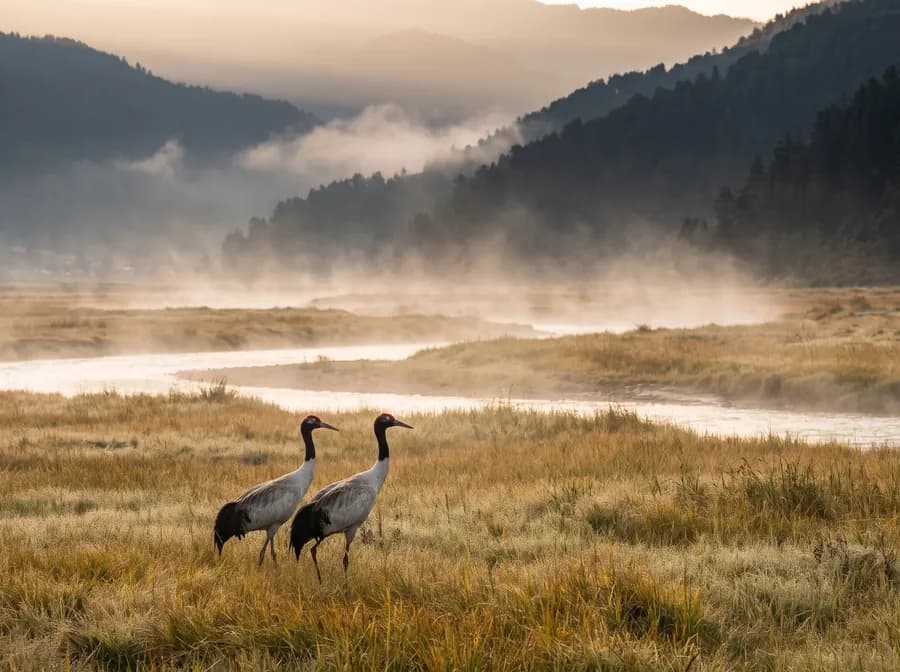
The black-necked cranes
Much of the valley's identity revolves around its winter visitors. The black-necked cranes arrive from the Tibetan plateau in late October and leave again in February and early March, and the valley goes out of its way to protect them: building is restricted, and visitors are asked to keep their distance and keep quiet near the roosting marsh.
The cranes matter to Bhutanese people for more than their rarity. They're seen as heavenly birds that bring long life, peace and good fortune, and people here say that when they arrive they circle Gangtey Monastery three times before landing, and do the same again when they leave in spring.
At sunrise their calls carry across the misty marsh before pairs lift off into the cold air. Watching hundreds of them feeding quietly below the forested hills is one of the most memorable things you can do in Bhutan. Before you go out, the Black-necked Crane Information Centre explains their migration and the work that protects them, and its viewing windows let you watch without disturbing them.
Gangtey Goenpa, the heart of the valley
Long before you reach it, you'll see the monastery's white walls and golden roofs above the village houses on the ridge. It was founded in 1613 by Gyalse Pema Thinley, grandson of the treasure-revealer Pema Lingpa, and is the most important Nyingma monastery in western Bhutan.
Painted murals line the entrance, butter lamps flicker in the temples, and monks move quietly between the buildings. From the courtyard the whole valley opens below you like a great green bowl. Even if you're not religious, it's worth the visit for the architecture, the art and the view.
The Black-Necked Crane Festival
Every 11 November, the usually quiet courtyard of Gangtey Goenpa fills with drums, cymbals and laughter. Monks perform mask dances, and local schoolchildren dress up as cranes to act out the birds' graceful movements. Around the edges, stalls sell snacks, games and all kinds of small things. It's one of Bhutan's most distinctive festivals, a celebration of the valley's bond with its winter visitors. See our festival calendar.
Village mornings and a night in the valley
Mornings often start under a blanket of mist. For a while only the monastery and the treetops rise above it, then the valley slowly appears. Walk the village lanes and you'll pass stacked firewood, grazing cattle and potato fields running to the foot of the hills. Farming here hasn't changed much in generations, and if you're invited into a farmhouse, you may be given a bowl of kewa datshi made with potatoes grown outside the door.
If your itinerary allows, spend the night rather than passing through. In the evening the mountains throw long shadows across the marsh, smoke rises from farmhouse chimneys and the valley goes almost silent. Early risers get drifting mist and soft gold light over the meadows, and in winter the first sound of the day is often the cranes calling across the valley.
Best time to visit Phobjikha Valley
For the cranes, come between November and February; the Black-Necked Crane Festival is held at Gangtey Monastery every 11 November. Winters are cold and can bring snow, so pack warm layers.
Spring and autumn are good for walking, and summer is green and quiet, though the cranes are gone.
Month by month across the country: the best time to visit Bhutan.
Getting to Phobjikha Valley
Phobjikha is about three hours' drive from Punakha over the Lawala pass, or around five from Thimphu. It is usually visited for one or two nights on the way to or from Punakha, or on the road to central Bhutan.
Accommodation ranges from farmhouses and small lodges to the luxury lodges of Gangtey Lodge, Six Senses and Amankora.
Phobjikha Valley on the map
Tours that visit Phobjikha Valley
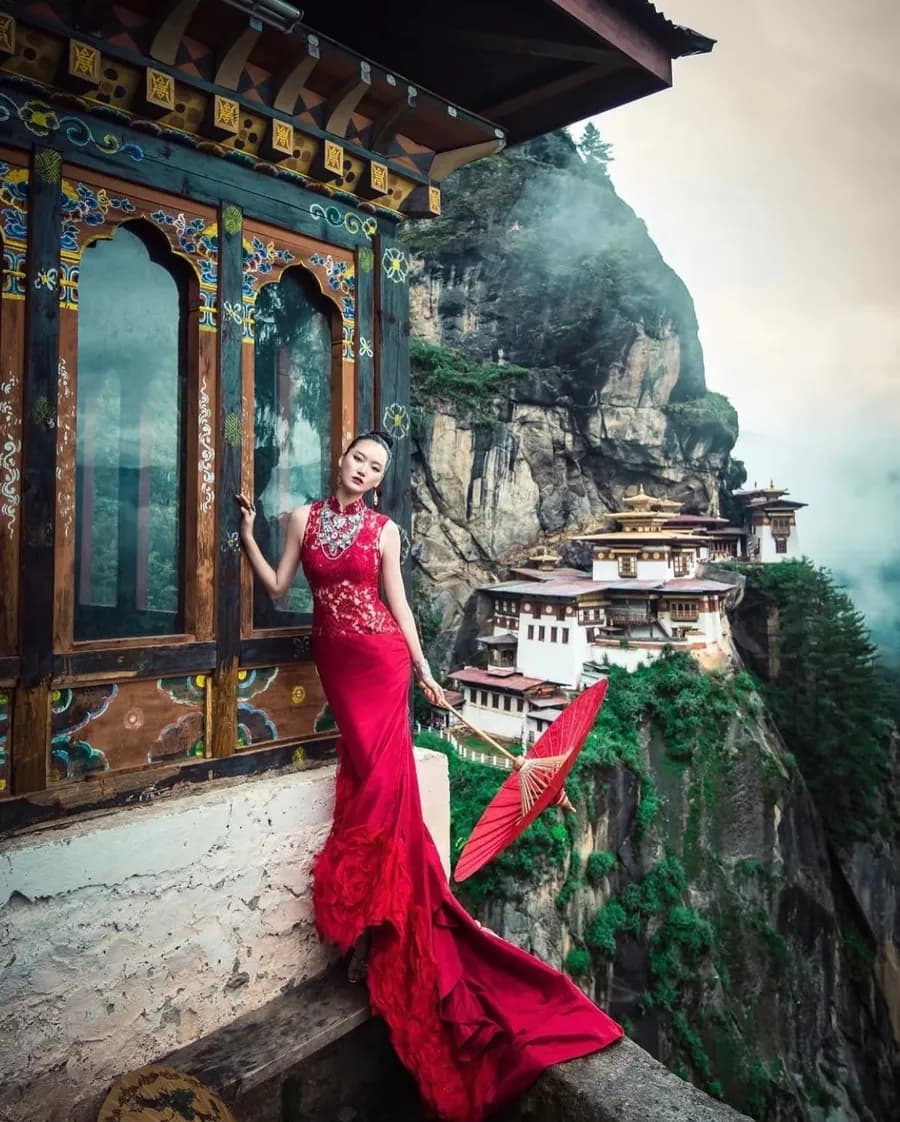 Cultural
Authentic Bhutan
Paro · Thimphu · Punakha · Phobjikha
$2,400pp
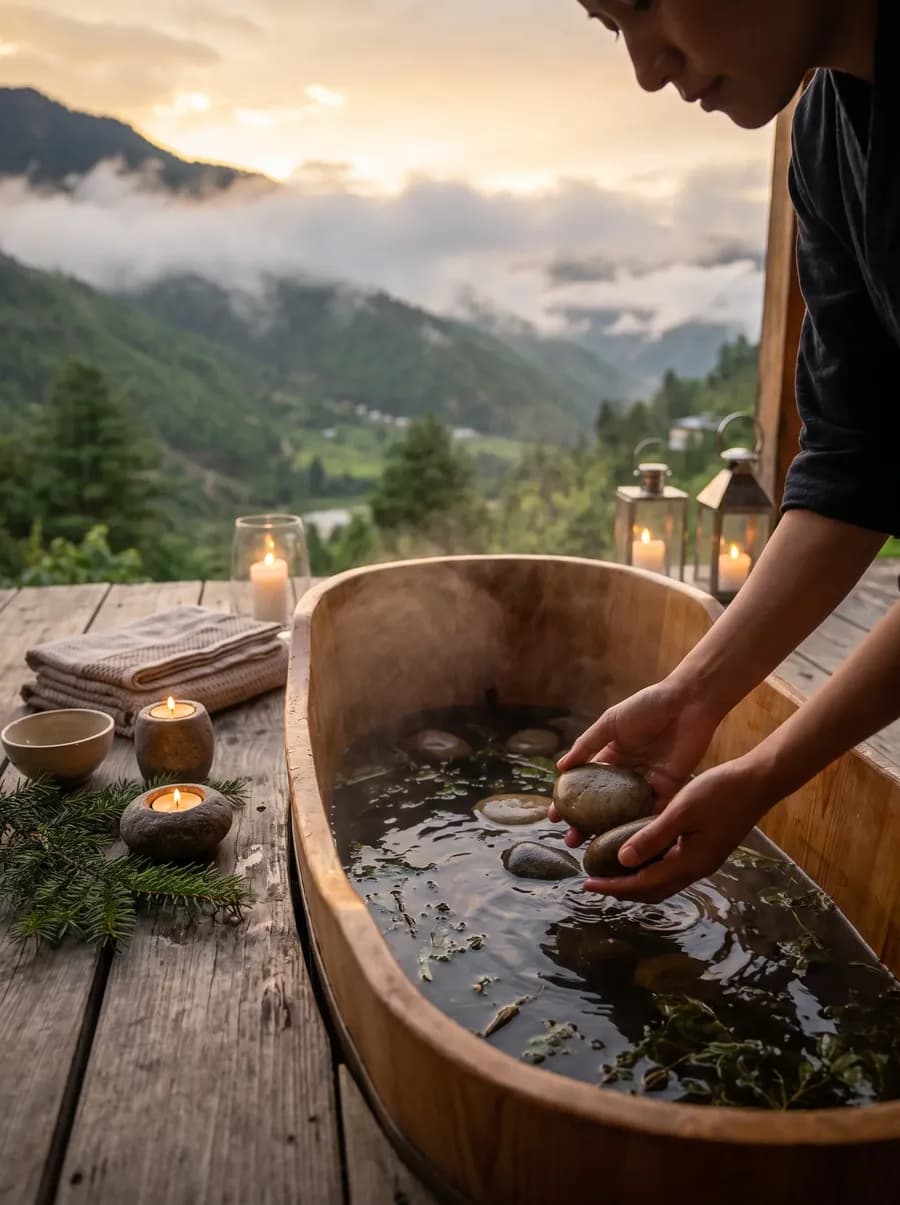 Wellness
Culture & Wellness
Paro · Punakha · Phobjikha
$2,880pp
 Trekking
The Bhutan Hiking Odyssey
Paro · Haa · Thimphu · Punakha · Gasa · Phobjikha · Paro
$4,500pp
 Adventure
The Bhutan Motorcycle Adventure
Paro · Chele La · Haa · Thimphu · Dochula · Punakha · Phobjikha · Paro
$2,760pp
Phobjikha Valley FAQs
Your questions, answered
Still wondering about something? Ask our Thimphu team directly. We're happy to help.
Ask us on WhatsAppFrom late October to February, with the most birds in the Phobjikha valley between November and January. They leave for Tibet in February or March.
Every year on 11 November, in the courtyard of Gangtey Monastery. Schoolchildren perform crane dances alongside masked dances, celebrating the birds' return.
Yes, more or less. Phobjikha is the name of the valley; Gangtey refers to the monastery on the ridge above it and the village around it, and is often used for the whole area.
One or two nights. One night is enough for the monastery, the nature trail and a crane-watching session; two lets you slow down with a farmhouse stay or a longer hike.
Yes. It's one of the most beautiful and peaceful valleys in Bhutan, with the black-necked cranes in winter, Gangtey Goenpa, easy walks and farmhouse stays. It fits well into a 7-day or longer trip, about three hours from Punakha.
Begin your journey
Let's design your Bhutan
Tell us a little about the trip you're dreaming of. A real travel specialist in Thimphu (not a call centre) will reply within a day with ideas and an honest, all-inclusive price.
Send an enquiry
No obligation. It's just the start of a conversation.