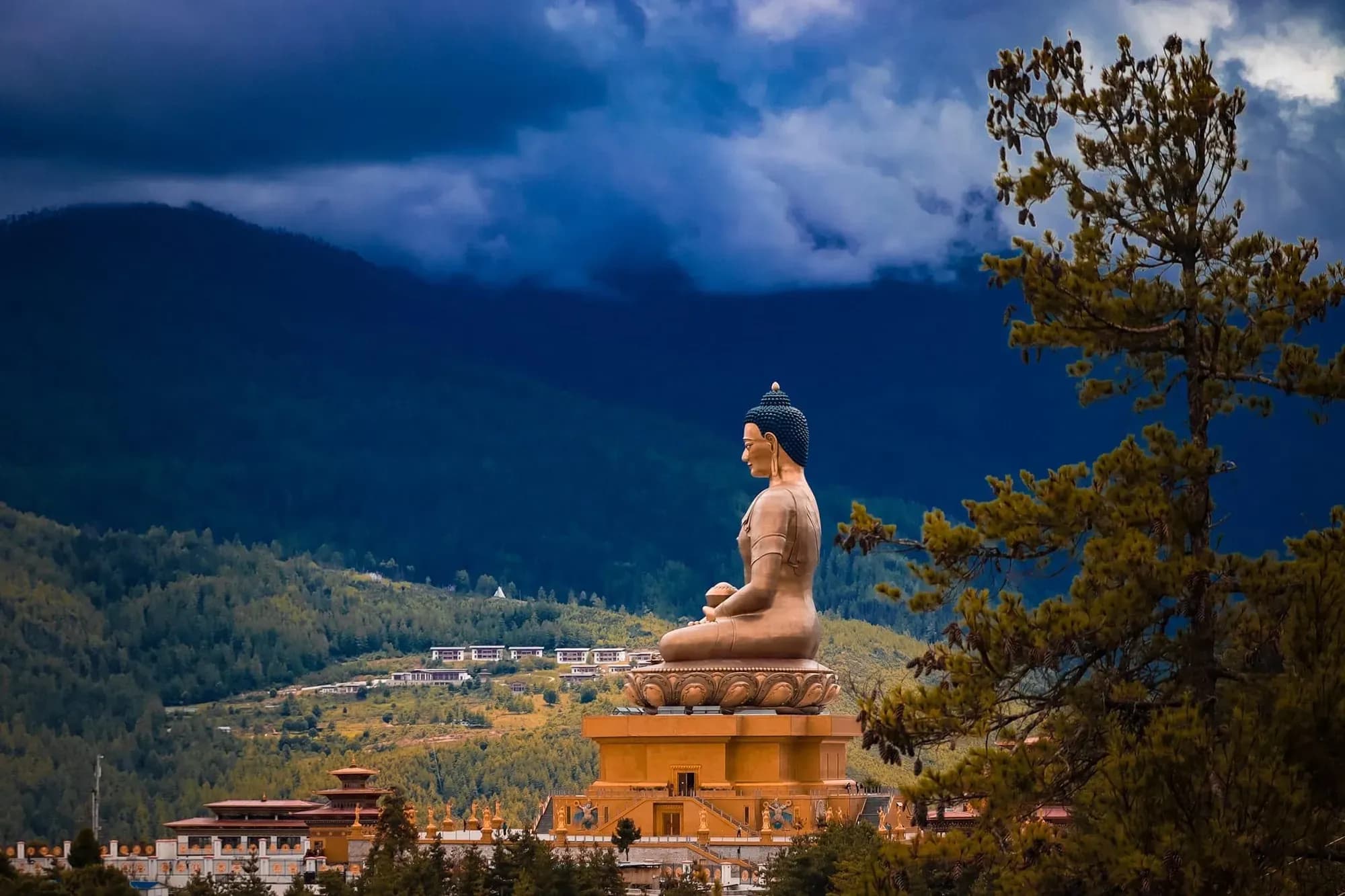
Thimphu, Bhutan's capital
Thimphu is Bhutan's capital and largest town, home to about 115,000 people at around 2,300 m in a valley an hour's drive from Paro. It is the country's seat of government and centre of its arts and crafts; one to two days covers the Buddha Dordenma, Tashichho Dzong, the Memorial Chorten, the markets and the museums.
- Altitude
- About 2,300 m
- From Paro
- About 1 hour by road
- Best time
- Mar–May · Sep–Nov
- Time needed
- 1–2 days
About Thimphu
Thimphu became Bhutan's capital in the 1950s and 1960s, and it is still one of the smallest capitals in the world. It is famous for having no traffic lights: at the busiest junction, a white-gloved policeman directs the traffic by hand.
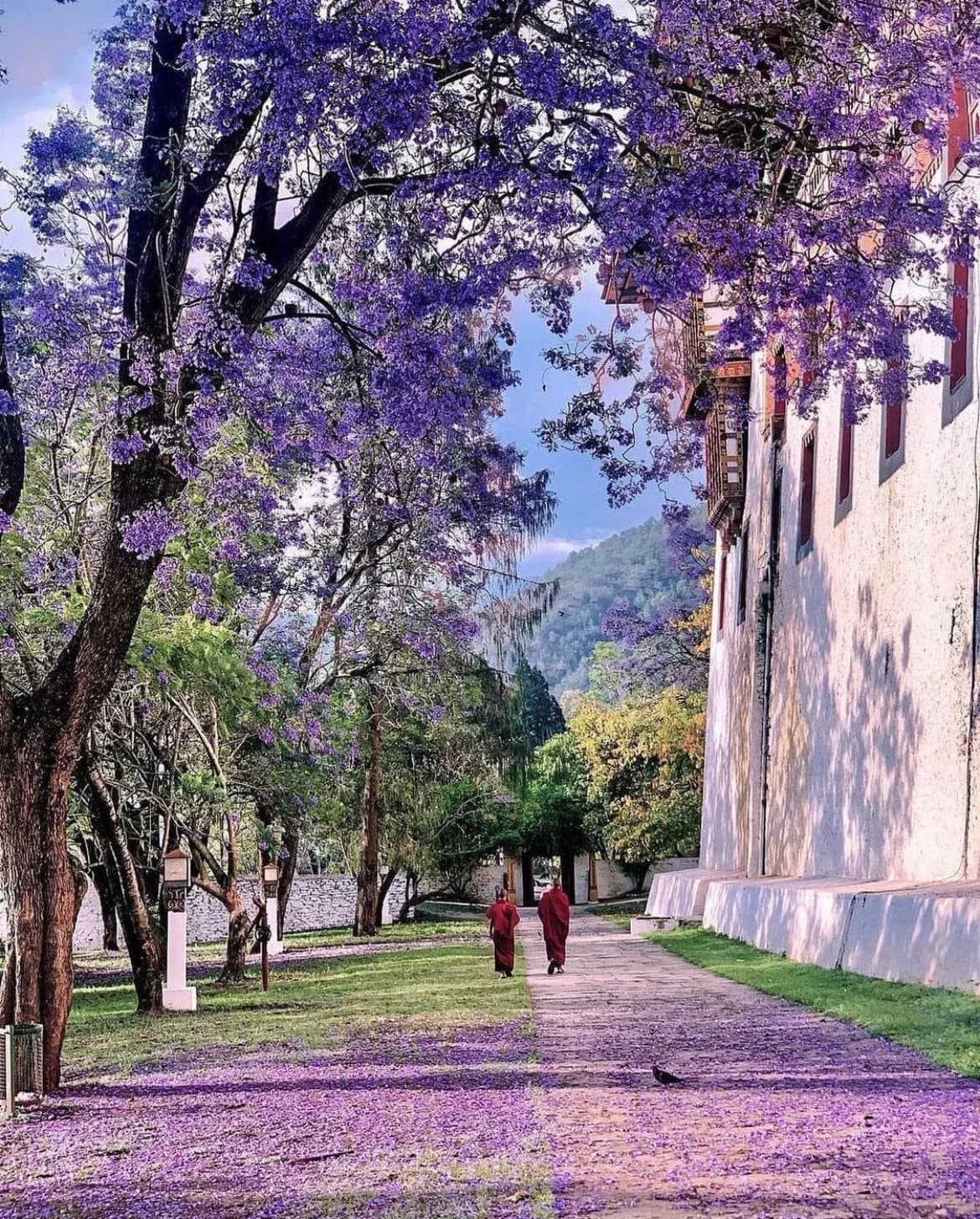
It is where you see modern Bhutan most clearly: government offices and monks, young people in national dress checking their phones, cafés beside temples. It is also the best place in the country to see the traditional arts, from painting and woodcarving to weaving.
Things to do in Thimphu
- 1
Buddha Dordenma
A 51-metre bronze and gilded Buddha on a ridge above the city, one of the largest seated Buddha statues in the world. Inside are 125,000 smaller Buddhas.
- 2
Tashichho Dzong
The seat of Bhutan's government and the king's office, and summer home of the central monk body. Visitors can enter the courtyards in the late afternoon, and the Thimphu Tshechu is held here each autumn.
- 3
National Memorial Chorten
A white stupa in the centre of town built in 1974 in memory of the Third King. Locals walk around it from dawn to dusk, spinning the great prayer wheels.
- 4
Weekend market
The Centenary Farmers' Market by the river sells chillies, cheese, red rice and incense, and is busiest at the end of the week; the handicraft stalls across the cantilever bridge are good for souvenirs.
- 5
Takin preserve
The Motithang Takin Preserve is the place to see Bhutan's odd-looking national animal, part goat and part antelope, in a patch of hillside forest.
- 6
Arts and crafts
Watch students at the Institute for Zorig Chusum learning the thirteen traditional arts, then visit the Folk Heritage Museum and the Royal Textile Academy.
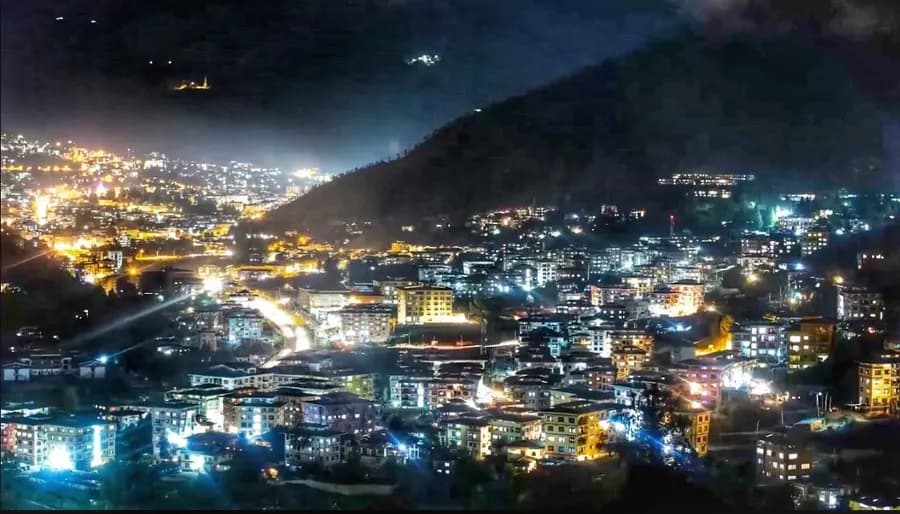
Walking around the city
Thimphu is easy to explore on foot. Start at the clock tower square, walk down Norzin Lam, the main street, and stop at the junction where the traffic policeman directs cars from his little painted pavilion. It's a slightly silly thing to photograph and everyone does it anyway.
The streets behind Norzin Lam are where people actually shop: small tailors stitching gho and kira, stationers, momo stalls and shops selling dried yak cheese on strings. At the end of the week, cross to the riverbank for the Centenary Farmers' Market, the best place in the country to see what Bhutanese people cook with. Our guide to Bhutanese food explains what you're looking at.
Places most visitors miss
One day covers the big sights. With a second day, our guides tend to add a few of these:
- Changangkha Lhakhang, a 12th-century temple on a ridge above the city. Parents bring newborn babies here to be named and blessed, and a monk can read your astrology if you ask.
- Dechen Phodrang, the site of Thimphu's original dzong. It's now a monastic school, and the old murals inside are some of the finest in the valley.
- The National Library, founded in 1967, which keeps old texts printed from carved wooden blocks and wrapped in silk.
- Simply Bhutan, a small living museum run by young Bhutanese, where you can try archery, put on a gho or kira and taste ara, the local spirit.
- The hike to Cheri Monastery, about an hour uphill from the end of the valley road. Bhutan's first monastic community was founded here in 1620, and you'll often see goral (mountain goats) on the cliffs.
Evenings in the capital
Thimphu is the only place in Bhutan with much of a night out. There are a few bars with live music at weekends, a craft beer taproom or two, and plenty of places for a long dinner. Most of our guests are tired enough after a day of sightseeing to want an early night, but if you'd like to see the city after dark, your guide will know where's good that week.
For our favourite places to eat, see the best restaurants and cafés in Thimphu and Paro.
Best time to visit Thimphu
Spring and autumn are the most comfortable months. Autumn brings the Thimphu Tshechu, the capital's biggest festival, usually in September or October. See the festival calendar for the dates.
Winter days are sunny and cold; summer is warm and green with afternoon rain.
Month by month across the country: the best time to visit Bhutan.
Getting to Thimphu
Thimphu is about an hour's drive from Paro airport along the river. From Thimphu the main road east climbs over Dochula Pass to Punakha, about three hours away.
Most trips spend one or two nights in Thimphu near the start, which also helps you acclimatise before the Tiger's Nest hike.
Thimphu on the map
Tours that visit Thimphu
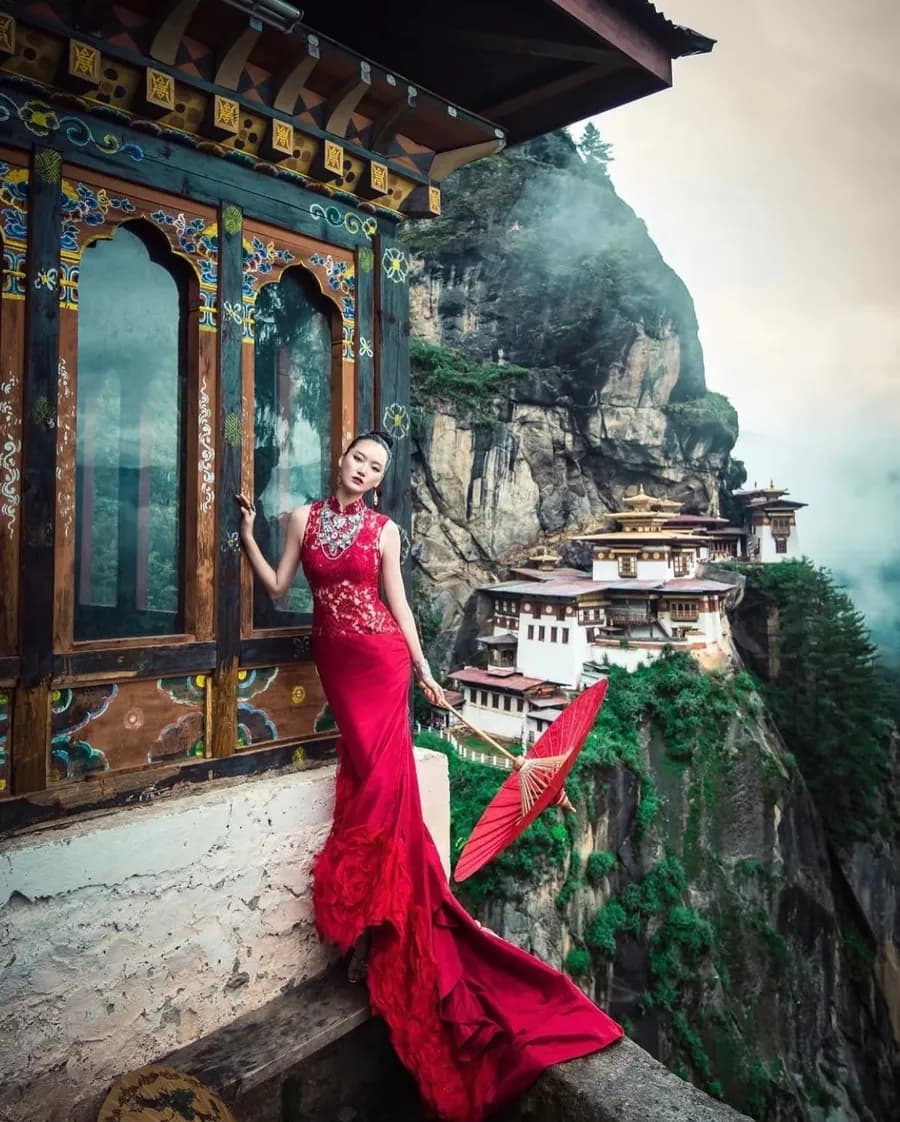 Cultural
Authentic Bhutan
Paro · Thimphu · Punakha · Phobjikha
$2,400pp
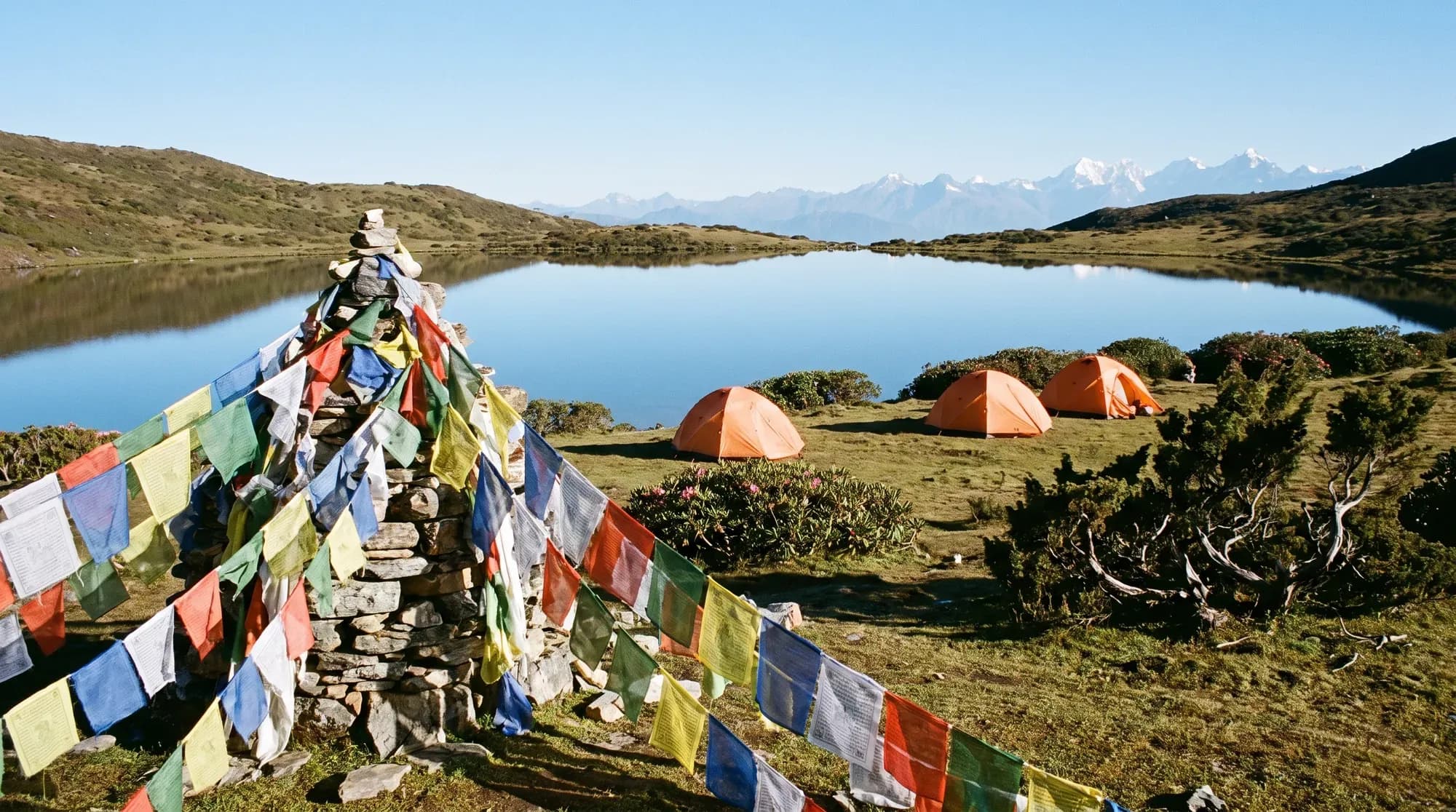 Trekking
Druk Path Trek & Culture
Paro · Jele Dzong · Jimilang Tsho · Simkotra Tsho · Thimphu · Punakha · Paro
$4,400pp
 Trekking
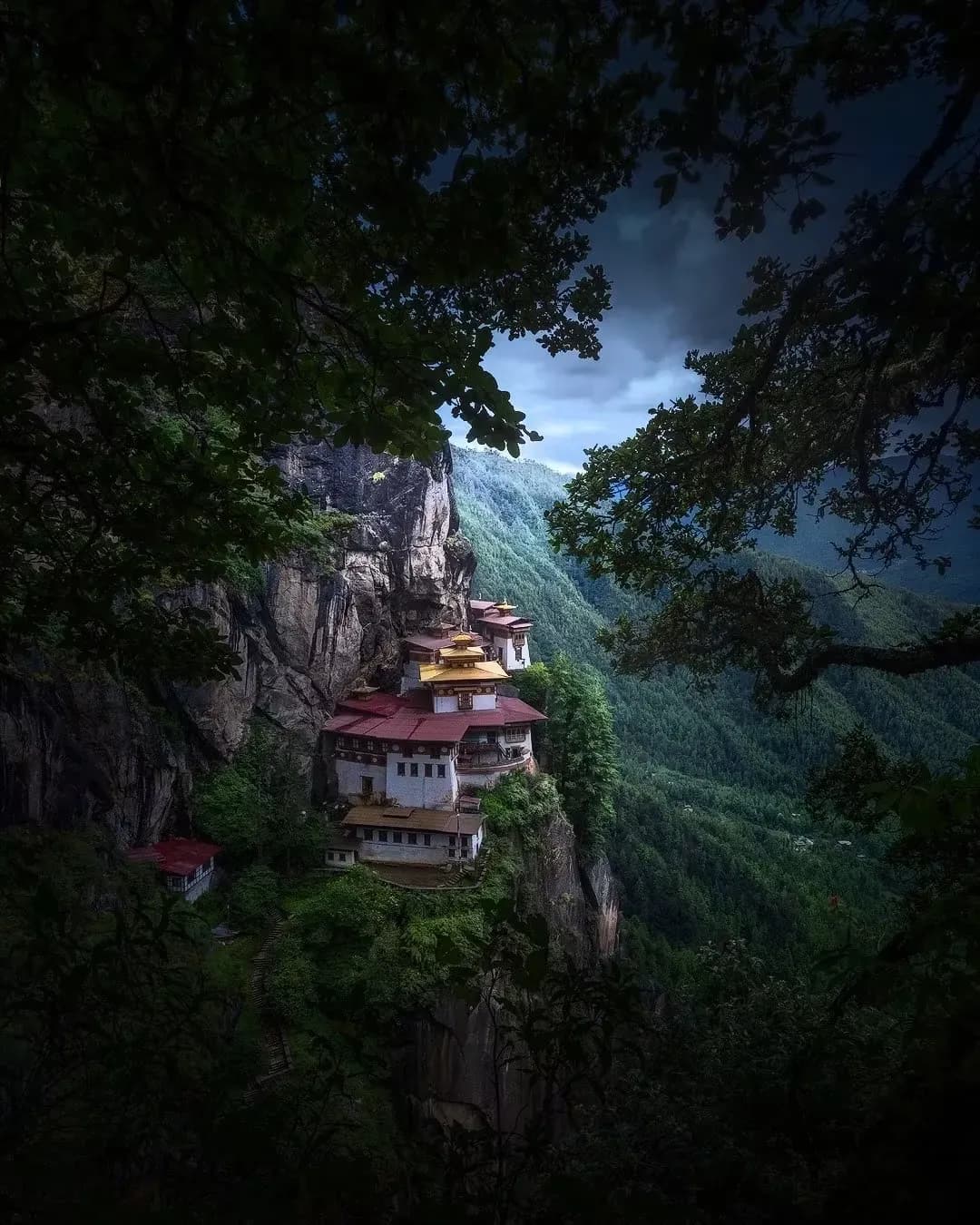
The Bhutan Hiking Odyssey
Paro · Haa · Thimphu · Punakha · Gasa · Phobjikha · Paro
$4,500pp
 Luxury
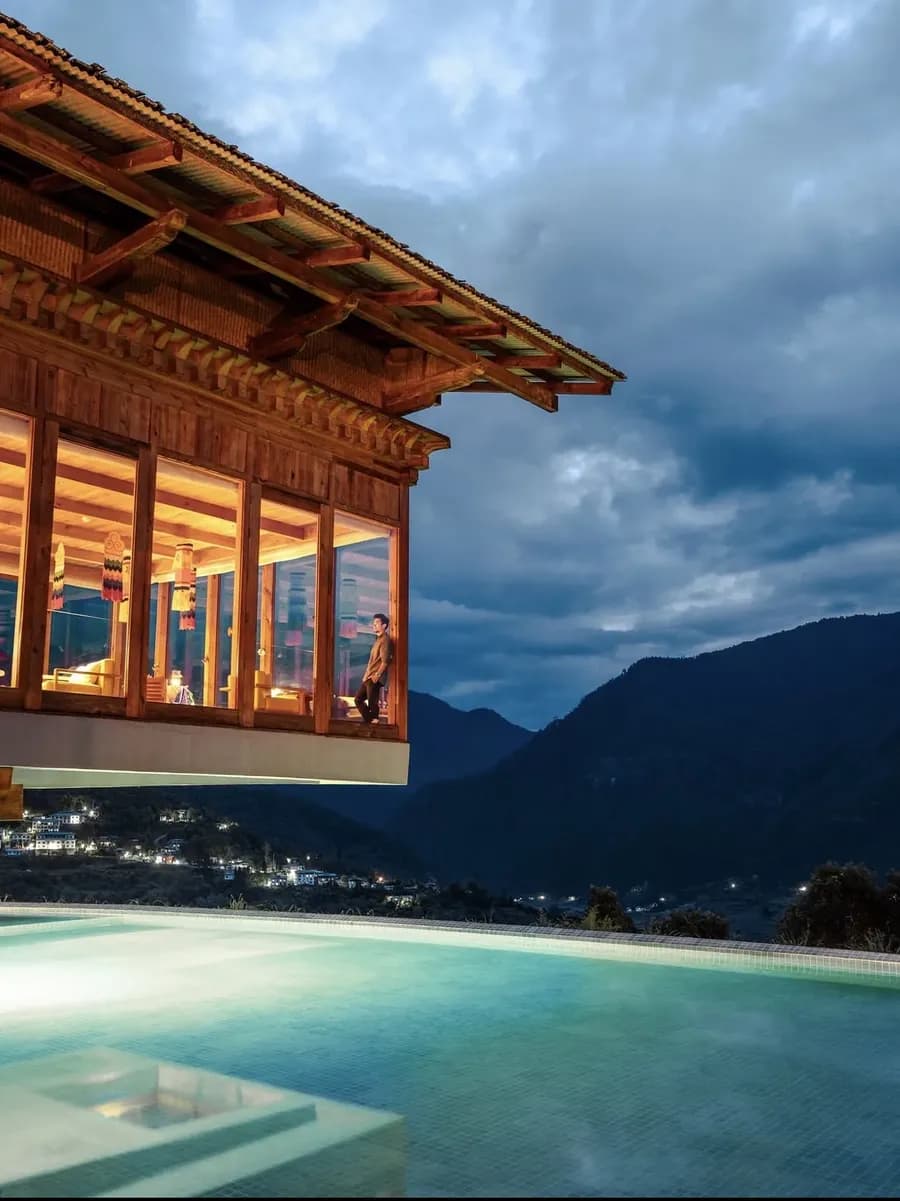
 in the Himalayas
Six Senses · Amankora · COMO Uma · more
On request
Thimphu FAQs
Your questions, answered
Still wondering about something? Ask our Thimphu team directly. We're happy to help.
Ask us on WhatsAppThimphu is Bhutan's capital, famous for the Buddha Dordenma statue, Tashichho Dzong, the National Memorial Chorten, the weekend market, its crafts school, and for being a capital with no traffic lights.
One to two days. One day covers the Buddha Dordenma, the Memorial Chorten, Tashichho Dzong and the market; a second day adds the crafts school, museums, the takin preserve or a hike to a hillside monastery.
Day-to-day costs like meals and handicrafts are moderate. The main cost of visiting Bhutan is the Sustainable Development Fee and your tour, which usually cover hotels, meals, guide and transport. See our guide to what a Bhutan trip costs.
Yes. A set of traffic lights was tried once but removed after residents complained; the main junction is still directed by a traffic policeman in a small decorated pavilion.
Yes, with your guide. Because it's a working government building, visitors can usually enter the courtyards in the late afternoon once offices close. During the Thimphu Tshechu the courtyard is open for the festival.
Walk Norzin Lam, have dinner at a local restaurant, try Bhutanese craft beer, or catch live music at a bar at the weekend. Thimphu is the liveliest place in Bhutan after dark, though it's still quiet by city standards.
Begin your journey
Let's design your Bhutan
Tell us a little about the trip you're dreaming of. A real travel specialist in Thimphu (not a call centre) will reply within a day with ideas and an honest, all-inclusive price.
Send an enquiry
No obligation. It's just the start of a conversation.