What is Bhutanese food like?
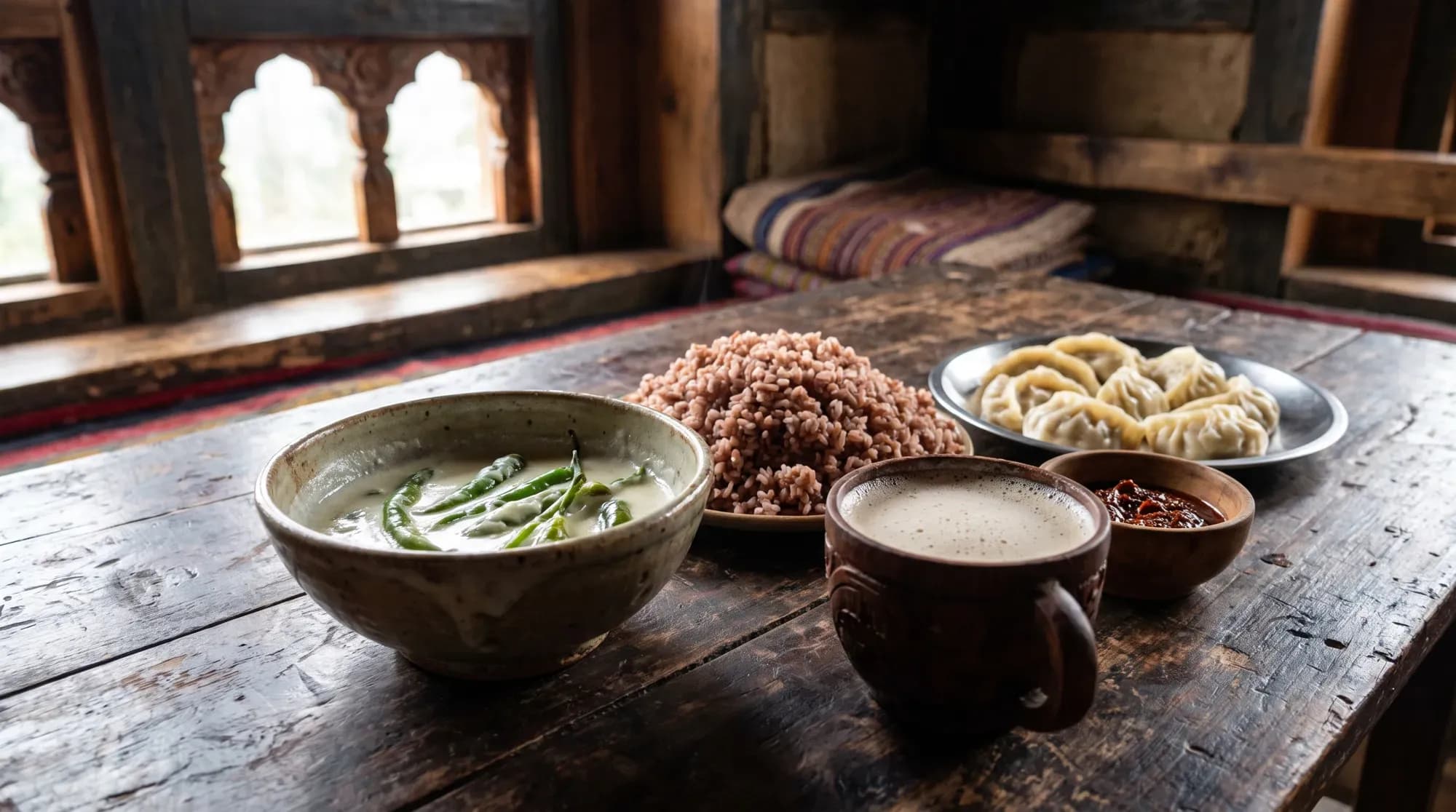
Hot, simple and filling. In Bhutan chillies are a vegetable, not a seasoning, so a dish of chillies is exactly that: a bowl of chillies. Cheese (datshi) goes into most curries, and every meal comes with a big bowl of red rice. Once you know two words you can read most menus. Anything ending in “datshi” is cooked with cheese, and anything ending in “paa” is meat stir-fried with chillies and vegetables.
Come in autumn and you'll see where it all starts. From September, red chillies are laid out to dry on the roofs of farmhouses all over the country, and whole valleys turn red for a few weeks. They're sold by the sack at the market in Thimphu, next to blocks of fresh cheese and strings of hard yak cheese called chugo, which people chew like gum for hours.
On a tour, most of your meals will be in hotels and local restaurants that cook a spread of Bhutanese, Indian, Chinese and Western dishes, with the chilli turned down for visitors. It's good food, but it isn't the real thing. Ask your guide for a farmhouse lunch at least once. Nearly every guest tells us afterwards that it was the best meal of the trip.
12 Bhutanese dishes and drinks to try
1. Ema datshi, the national dish
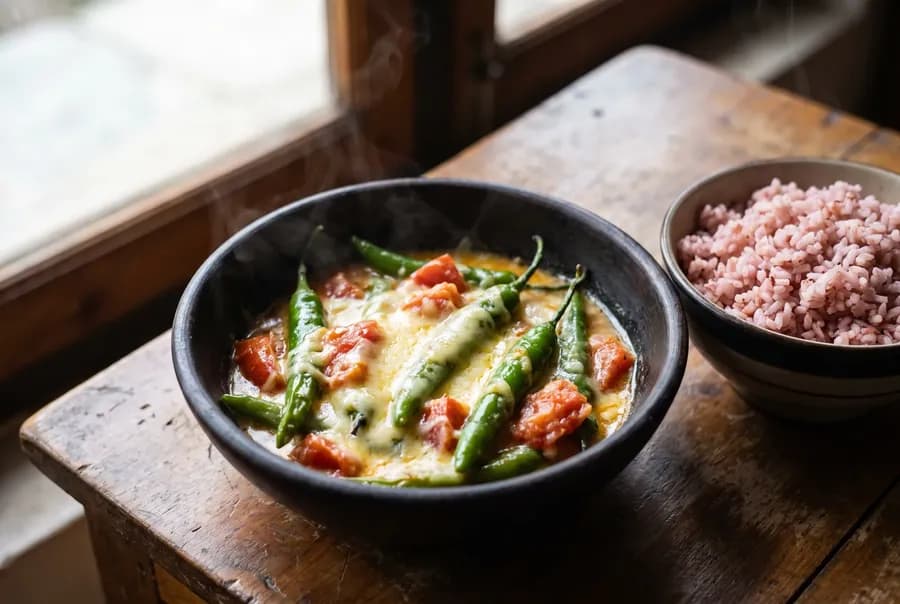
Green or dried red chillies, usually left whole or split down the middle, simmered with onion and tomato in melted local cheese. Bhutanese families eat it at almost every meal, spooned over red rice. The version served to visitors is mild. The version a Bhutanese grandmother makes will make your eyes water, and she'll be delighted if you finish it.
There are three main kinds, named for the chilli. The everyday version uses fresh green chillies, bright and sharp in the creamy cheese. Ema kam datshi, made with dried red chillies, is hotter, with a slight sweetness. Shukam datshi uses green chillies that have been boiled and dried until they turn white, which gives it an earthier taste. It's harder to find, but worth trying if you see it.
2. Kewa datshi (potatoes and cheese)
Sliced potatoes cooked in the same cheese sauce, with just a few chillies. It's the gentlest datshi and the one we suggest ordering first if you're nervous about spice.
3. Shamu datshi (mushrooms and cheese)
Mushrooms in cheese sauce. In summer and early autumn it's made with wild mushrooms picked in the forests around Thimphu and Bumthang, and it's much better for it.
4. Red rice
A semi-milled rice with a nutty taste that turns pale pink when it's cooked. It grows in the valleys of Paro, Punakha and Wangdue, and it's the base of nearly every meal. Roasted and puffed, it becomes zaw, a crunchy snack served with tea.
5. Phaksha paa (pork with chillies)
Strips of pork, often dried and fatty, fried with dried chillies and radish, turnip or mustard greens. It's one of the most loved dishes in the country and a regular at weddings and festivals.
Its cousin sikam paa is pork belly air-dried before cooking, so the thin slices crisp at the edges and taste smoky and rich. It's a favourite at Losar, the Bhutanese New Year, and one of the dishes visitors tend to crave after they get home.
6. Shakam paa (dried beef)
Beef dried in strips over the kitchen fire, then cooked with chillies and vegetables. It's chewier and stronger than fresh meat. In winter it's often cooked into shakam datshi, a rich stew with cheese.
7. Jasha maru (spicy chicken)
Finely chopped chicken cooked with tomato, onion, garlic, ginger and chilli into a light, brothy curry. It's lighter than most Bhutanese meat dishes and goes well with red rice.
8. Momos
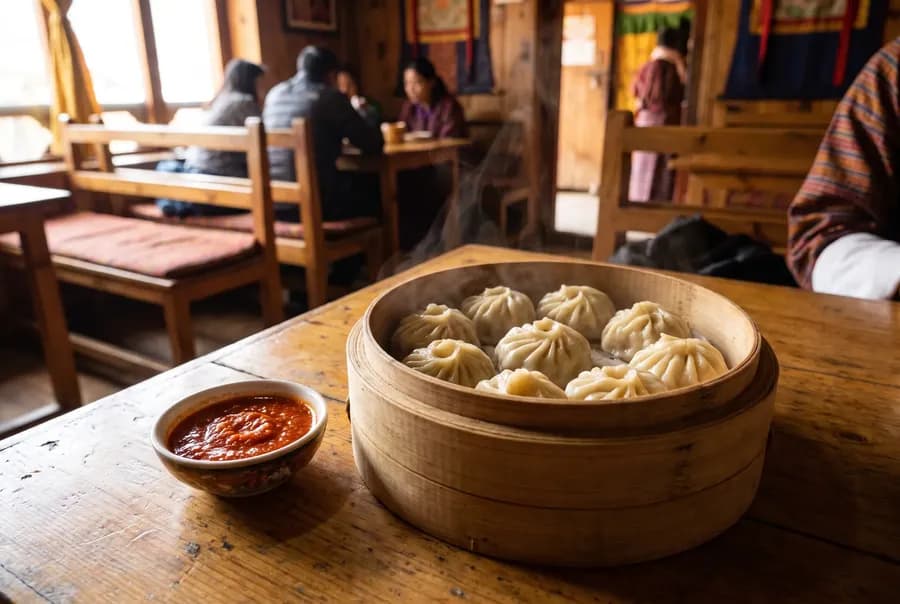
Steamed dumplings filled with cheese, cabbage, pork or beef, with a small bowl of chilli sauce on the side. Cheese momos are a Bhutanese speciality, and every town has a momo shop that locals swear is the best.
The classic fillings are minced beef with onion, and cheese with cabbage. They come with ezay, a chilli paste or sauce that every kitchen makes its own way. Some cafés in Thimphu now sell newer versions such as ema datshi momos and kewa (potato) momos, worth ordering if you see them.
9. Hoentay (buckwheat dumplings from Haa)
Buckwheat dumplings stuffed with turnip leaves, spinach, cheese and chilli, then steamed or fried. They come from the Haa valley and are made especially for Losar, the Bhutanese New Year. If your trip goes over Chele La, ask for them.
10. Puta (buckwheat noodles from Bumthang)
In central Bhutan it's too cold for much rice, so people eat buckwheat. Puta are thick buckwheat noodles tossed with butter or mustard oil and a little chilli. You'll also find khuli, thin buckwheat pancakes.
11. Suja (butter tea)
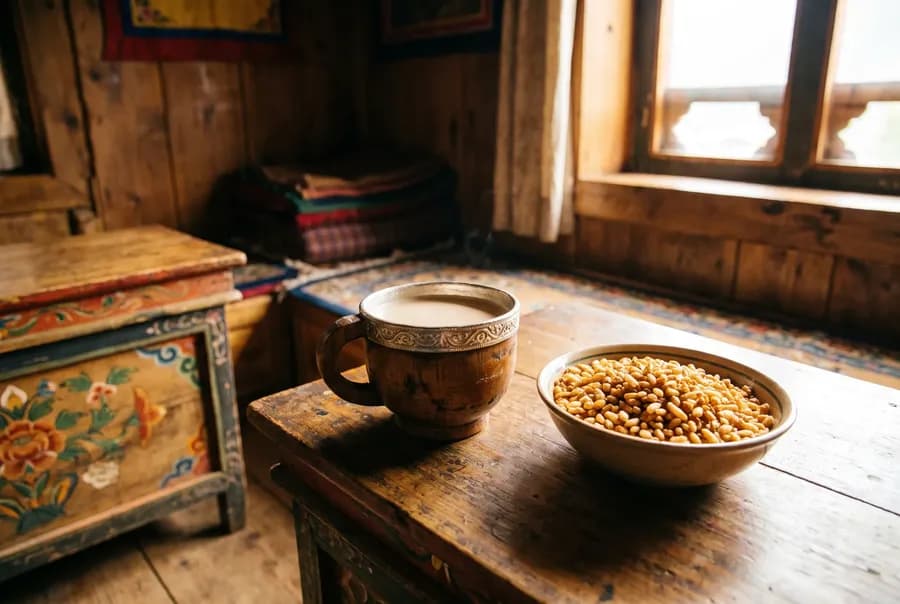
Tea churned with butter and salt. If you expect sweet milky tea you'll be surprised: it tastes more like a light, salty soup. You'll be offered it in homes and monasteries, usually with a bowl of zaw, and on a cold morning it makes perfect sense.
Bhutanese suja is a pinkish-brown colour and usually milder than the butter tea of Tibet and Ladakh.
12. Ara (home-made spirit)
A clear spirit distilled at home from rice, maize, millet or wheat. On special occasions it's warmed in a pan with butter and scrambled egg. You'll almost certainly be offered a cup in a farmhouse. Sip it slowly: it's stronger than it looks.
How a Bhutanese meal works
At home, families traditionally sit on the floor around shared dishes and eat with their right hand, rolling a little rice into a ball and dipping it into the curry. Nobody will expect you to do this, but your hosts will enjoy it if you try.
Breakfast is usually whatever's left from last night: red rice and a datshi, warmed up, with butter tea or sweet milky tea. Some families eat zaw (puffed rice) stirred into butter tea instead, and in Bumthang it's often buckwheat pancakes. Your hotel will also have eggs, toast and porridge.
Hospitality has its own small ritual. When you're offered food or a second helping, it's polite to say “meshu meshu” (no, no) once or twice, and your host will keep insisting until you accept. Leaving a little on your plate at the end is fine. It tells your host they fed you well.
Is Bhutanese food vegetarian-friendly?
Very. The datshi dishes, red rice, cheese momos, buckwheat dishes and plenty of green vegetables are all vegetarian, and hotels are used to cooking vegetarian and vegan meals. Many Buddhists in Bhutan avoid killing animals, so a lot of the meat eaten in the country is actually brought in from India.
Seasonal vegetables get the datshi treatment too. In spring, look for nakey datshi, made with fiddlehead ferns, which stay pleasantly crunchy in the cheese.
Is Bhutanese food healthy?
Mostly, yes. Everyday meals are built on red rice, vegetables and fresh chillies, much of it grown by the family or bought at the local market, and there's very little processed food outside the towns. The one thing to watch is the cheese and butter, which go into a lot of dishes. If you want lighter meals, ask for vegetable dishes without datshi, or jasha maru with rice.
What to drink in Bhutan
Apart from butter tea and ara, most restaurants serve sweet milky tea (ngaja) and good local coffee. Bhutan also makes its own beer. Druk 11000 is the strong lager you'll see everywhere, and in Bumthang you can try Red Panda, an unfiltered wheat beer brewed in Jakar. Tap water isn't safe to drink, so stick to boiled or filtered water, which every hotel provides. Alcohol is legal and easy to find in hotels, bars and restaurants, but you won't be served in dzongs, temples or monasteries.
Where to try Bhutanese food
- A farmhouse lunch in Paro, Punakha or the Phobjikha valley, cooked on a wood stove by the family. We add one to most itineraries.
- Local restaurants in town. See our picks for the best restaurants and cafés in Thimphu and Paro.
- Festival stalls. At a Tshechu, stalls sell momos, hoentay and fried snacks between the dances.
- The Centenary Farmers' Market in Thimphu, the best place to see dried chillies, cheese, red rice and yak cheese sold by the sack.
All meals are included in the price of a Bhutan tour, so you can order freely and try things. See what a Bhutan trip costs for everything that's included.
Read next
About the author
Lucky Dragon Tours & Treks · Licensed tour operator, Thimphu. Our Thimphu team plans private, tailor-made trips across Bhutan and writes from what we see on the road with our guests.
Published · last updated