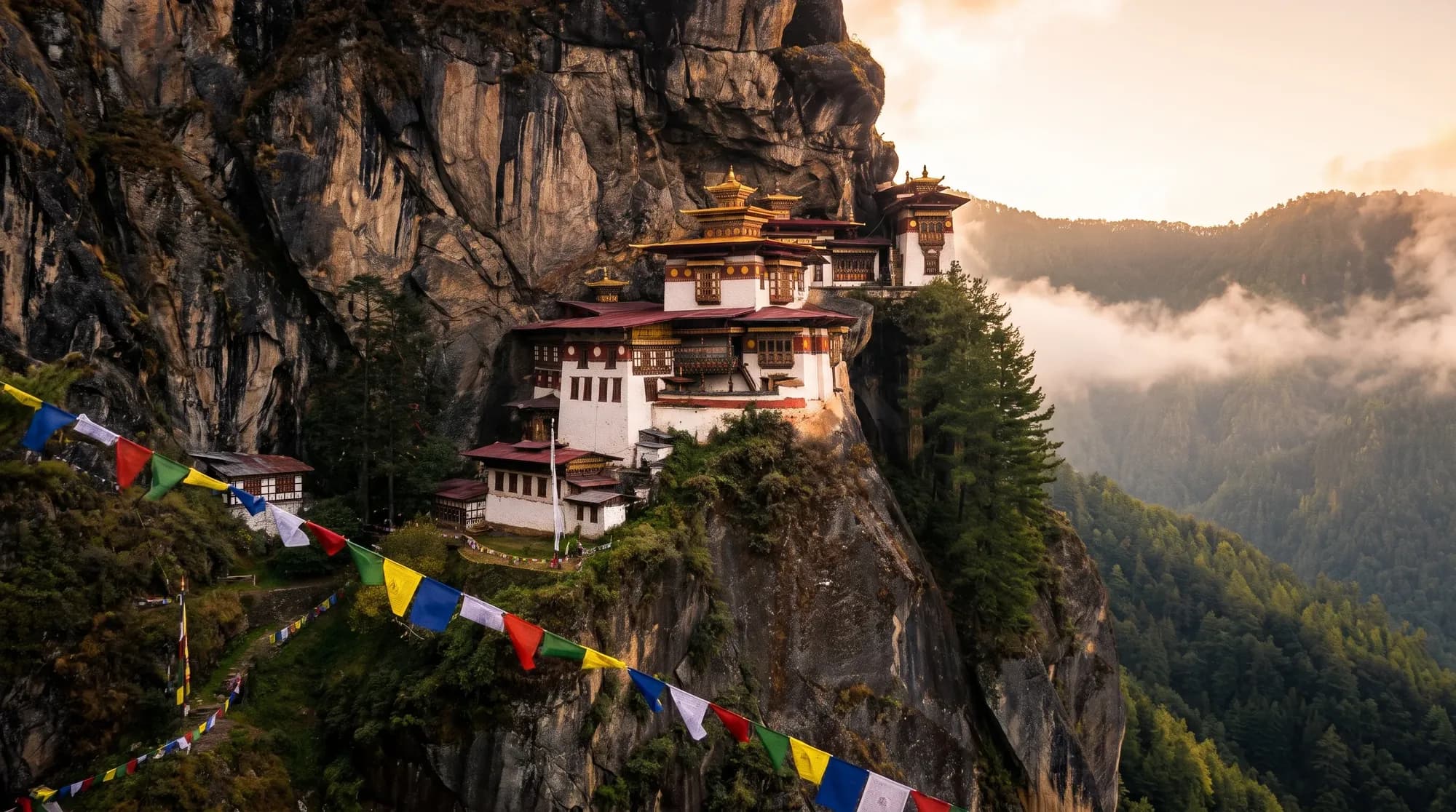
Tiger's Nest: hiking to Paro Taktsang
The Tiger's Nest (Paro Taktsang) is a Buddhist monastery built into a cliff about 3,120 m high, some 900 m above the Paro valley. Reaching it is a moderate hike of around 6 km there and back, climbing about 500 m; most people take four to six hours, including time inside the temples.
- Height
- About 3,120 m (10,240 ft)
- Hike
- ~6 km round trip · ~500 m climb
- Time
- 4–6 hours
- Difficulty
- Moderate
About Tiger's Nest
Taktsang means 'tiger's lair'. Legend says that in the 8th century Guru Rinpoche, who brought Buddhism to Bhutan, flew here from Tibet on the back of a tigress and meditated in a cave in the cliff, subduing the demons of the valley. The cave is still the heart of the monastery.
The temples you see today were first built in 1692 around that cave. A fire in 1998 destroyed much of the complex, and it was carefully rebuilt in the original style. It reopened in 2005. It remains an active place of pilgrimage for Bhutanese, who climb it on auspicious days.
Visiting Tiger's Nest
- 1
The forest trail
The path climbs through blue pine and oak draped in lichen, past prayer wheels turned by streams and lines of prayer flags. It is steep in places but well made.
- 2
The halfway cafeteria
About halfway up, a cafeteria with a terrace looks straight across at the monastery. It's the classic place for tea and a rest, and the turnaround point for anyone who wants a shorter walk.
- 3
The viewpoint and the steps
Above the cafeteria the trail reaches a viewpoint level with the monastery, then drops down several hundred stone steps to a waterfall and bridge before climbing up again to the gate.
- 4
Inside the temples
Your guide will take you through several of the shrines, including the cave where Guru Rinpoche is said to have meditated. Cameras and bags are left in lockers at the entrance.
- 5
A pony for the first half
Ponies can carry you uphill as far as the cafeteria. From there everyone walks, about an hour uphill at a gentle pace to the monastery. Ponies aren't used on the way down, which is steep for them.
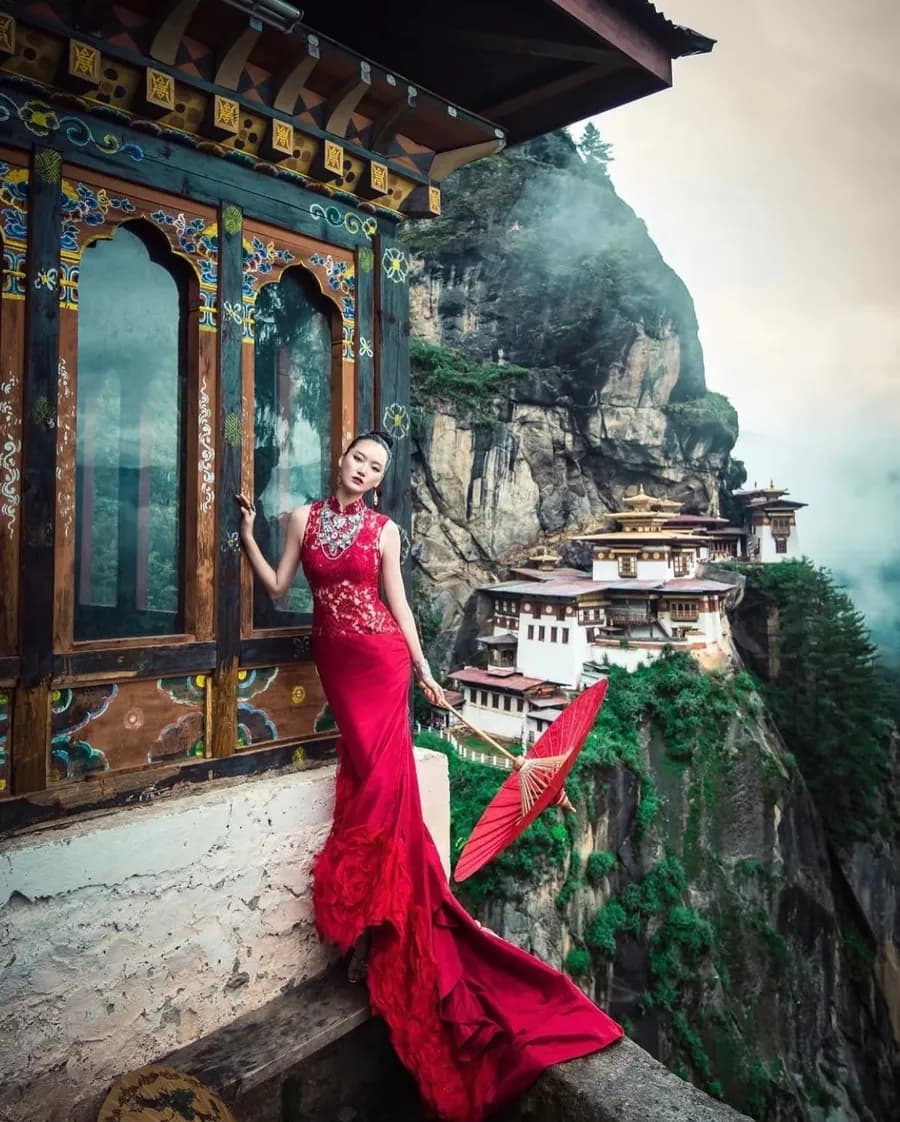
The hike, stage by stage
The walk starts at a car park at about 2,600 m, where a line of stalls sells prayer beads, masks and walking sticks. Take a stick. You'll be glad of it on the way down.
The first stretch climbs steadily through blue pine for about an hour to the cafeteria, where most people stop for tea and biscuits and their first proper look at the monastery across the gorge. If you rode a pony this far, this is where you get off.
From the cafeteria it's another 45 minutes or so up to the viewpoint, the spot where you'll take the photo everyone takes. The monastery is right in front of you, level with your eyes. Then comes the part nobody warns you about: you have to go down several hundred stone steps to a waterfall and a small bridge, and then climb back up the other side to the gate. On the way home you do those steps in reverse.
Inside, you'll spend 45 minutes to an hour moving between the shrines with your guide. The walk back to the car park takes most people two to three hours, with lunch at the cafeteria.
What a local notices
A few years ago PemC, a Bhutanese photographer who wrote for our old blog, went up on a weekday morning with two friends. Having grown up with the Tiger's Nest on every poster, PemC admitted to no longer finding it very exciting, and expected a crowded walk and a few good photos.
What PemC came back talking about wasn't the photos. It was the smell of the pine forest on the way up, an older couple who overtook the group without looking remotely tired, and the sound of monks chanting inside while incense smoke drifted across the shrine. The advice was the same as our guides': don't race to the top and back. Stop, drink some water, and let the place work on you.
Tips from our guides
- Be on the trail by 8 am. It's cooler, the light on the monastery is softer, and you'll reach the gate before the midday closure.
- Carry some small notes if you'd like to make an offering or light a butter lamp inside.
- Your camera, phone and bag go in a locker at the entrance. Photos are fine from the trail and the viewpoint, but not inside.
- Pack a warm layer even in summer. The wind at the viewpoint can be cold, and you'll be sweating from the climb.
- If you're worried about the steps, tell your guide. Plenty of people stop at the viewpoint, and it's still a wonderful day out.
Best time to visit Tiger's Nest
The hike is possible all year. Spring (March to May) and autumn (late September to November) have the best weather and the clearest views; winter mornings are crisp and clear but icy in shade, and monsoon months (June to August) bring mud and mist.
Start early, ideally on the trail by 8 am, for cooler walking, softer light and fewer people. We usually schedule the hike near the end of a trip, when you are used to the altitude.
Month by month across the country: the best time to visit Bhutan.
Getting there and what to bring
The trailhead is about 20 minutes' drive north of Paro town. Visiting the monastery requires a licensed guide, who arranges your entry; it closes for lunch in the middle of the day, so timing matters.
Wear good walking shoes, bring water, a warm layer and sun protection, and dress for the temples: long sleeves and long trousers or a skirt, and no hats inside. Our guide to what to wear in Bhutan has the details.
Tiger's Nest on the map
Tours that visit Tiger's Nest
CulturalAuthentic Bhutan
Paro · Thimphu · Punakha · Phobjikha
$2,400pp
 Trekking
The Bhutan Hiking Odyssey
Paro · Haa · Thimphu · Punakha · Gasa · Phobjikha · Paro
$4,500pp
 Wellness
Culture & Wellness
Paro · Punakha · Phobjikha
$2,880pp
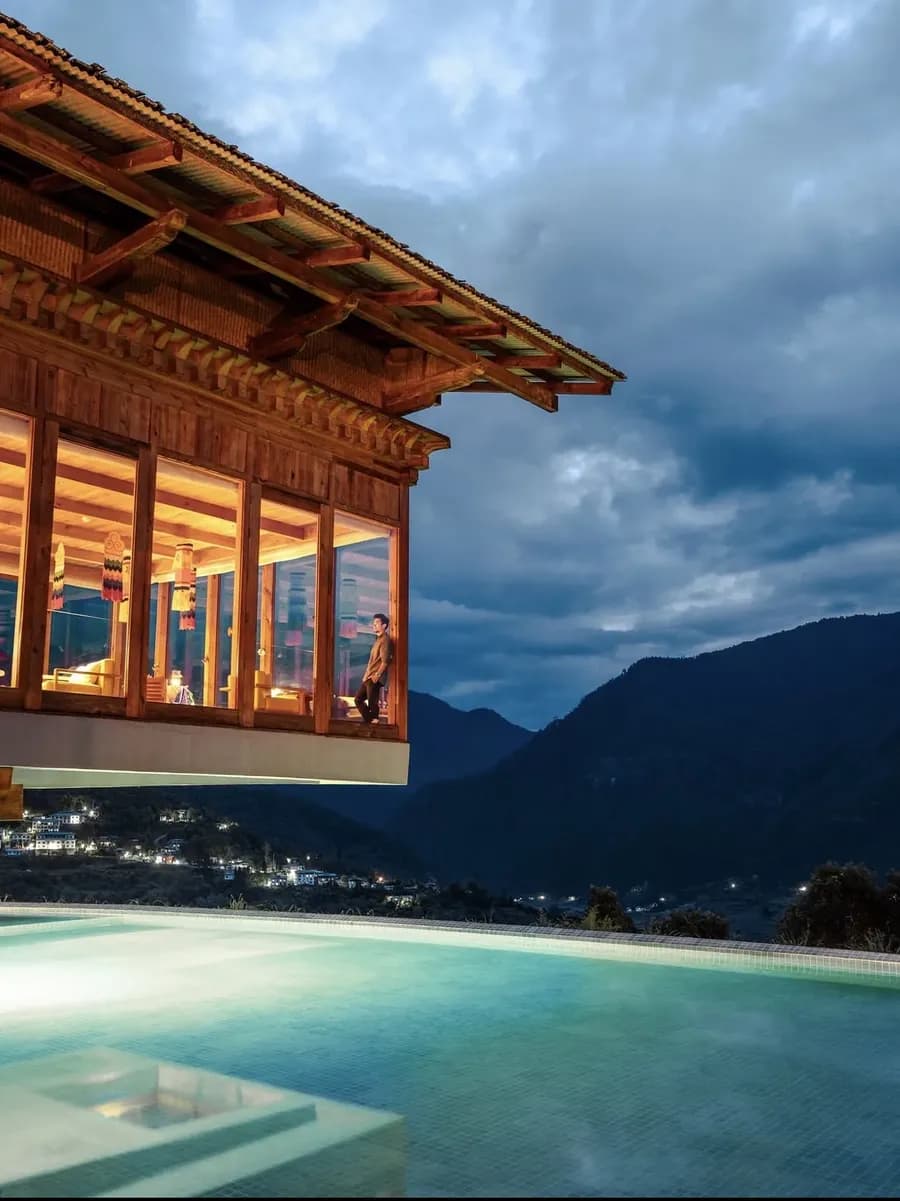 Luxury
 in the Himalayas
Six Senses · Amankora · COMO Uma · more
On request
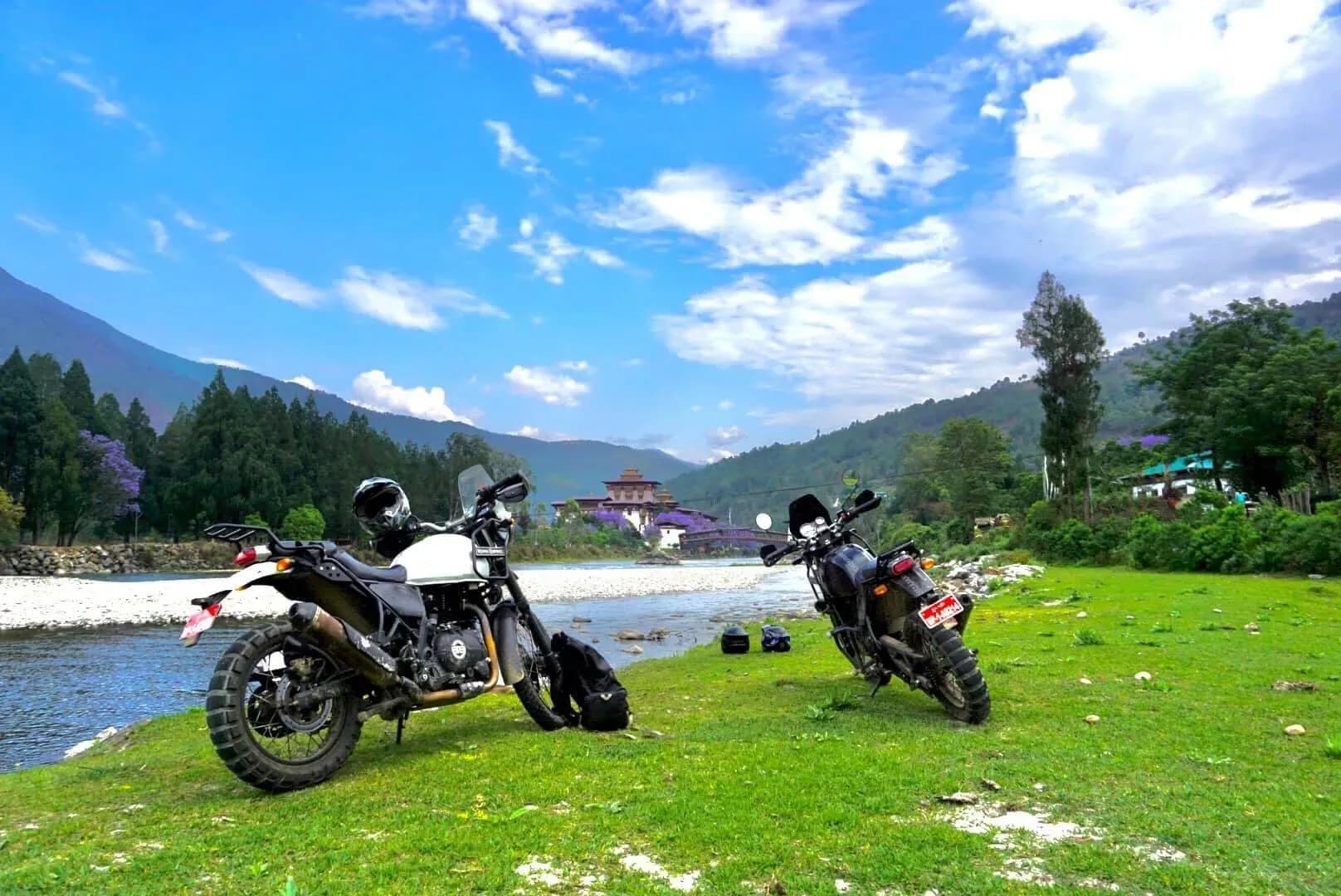 Adventure
The Bhutan Motorcycle Adventure
Paro · Chele La · Haa · Thimphu · Dochula · Punakha · Phobjikha · Paro
$2,760pp
Tiger's Nest FAQs
Your questions, answered
Still wondering about something? Ask our Thimphu team directly. We're happy to help.
Ask us on WhatsAppIt is a moderate hike rather than a technical one: about 6 km there and back with roughly 500 m of climbing, at altitude. Anyone reasonably fit who walks at their own pace can do it; ponies can carry you as far as the halfway cafeteria.
Most people take four to six hours for the round trip, including 45 minutes to an hour inside the monastery and a tea stop at the cafeteria. Fast walkers can be up in under two hours.
The monastery stands at about 3,120 m (10,240 ft) above sea level, roughly 900 m above the floor of the Paro valley. The trailhead is at about 2,600 m.
Bhutanese tradition says that in the 8th century Guru Rinpoche flew to the cliff on the back of a tigress, then meditated in a cave there for three years, three months, three weeks and three days, subduing local demons and bringing Buddhism to Bhutan.
A cluster of small temples and shrines built around sacred caves, including the cave where Guru Rinpoche meditated. Inside are statues, butter lamps and wall paintings; photography is not allowed, so cameras and bags stay in lockers at the gate.
Yes. International visitors need a licensed Bhutanese guide to enter the monastery, as at all dzongs and temples. Your guide arranges entry and walks the trail with you.
Yes, from the trail and the viewpoint opposite the monastery, which is where the famous photo is taken. Photography isn't allowed inside the temples, and cameras and phones are left in lockers at the entrance.
Only part of the way. Ponies can carry you uphill as far as the halfway cafeteria. From there everyone walks, about an hour uphill at a gentle pace, and ponies aren't used for the descent.
Begin your journey
Let's design your Bhutan
Tell us a little about the trip you're dreaming of. A real travel specialist in Thimphu (not a call centre) will reply within a day with ideas and an honest, all-inclusive price.
Send an enquiry
No obligation. It's just the start of a conversation.