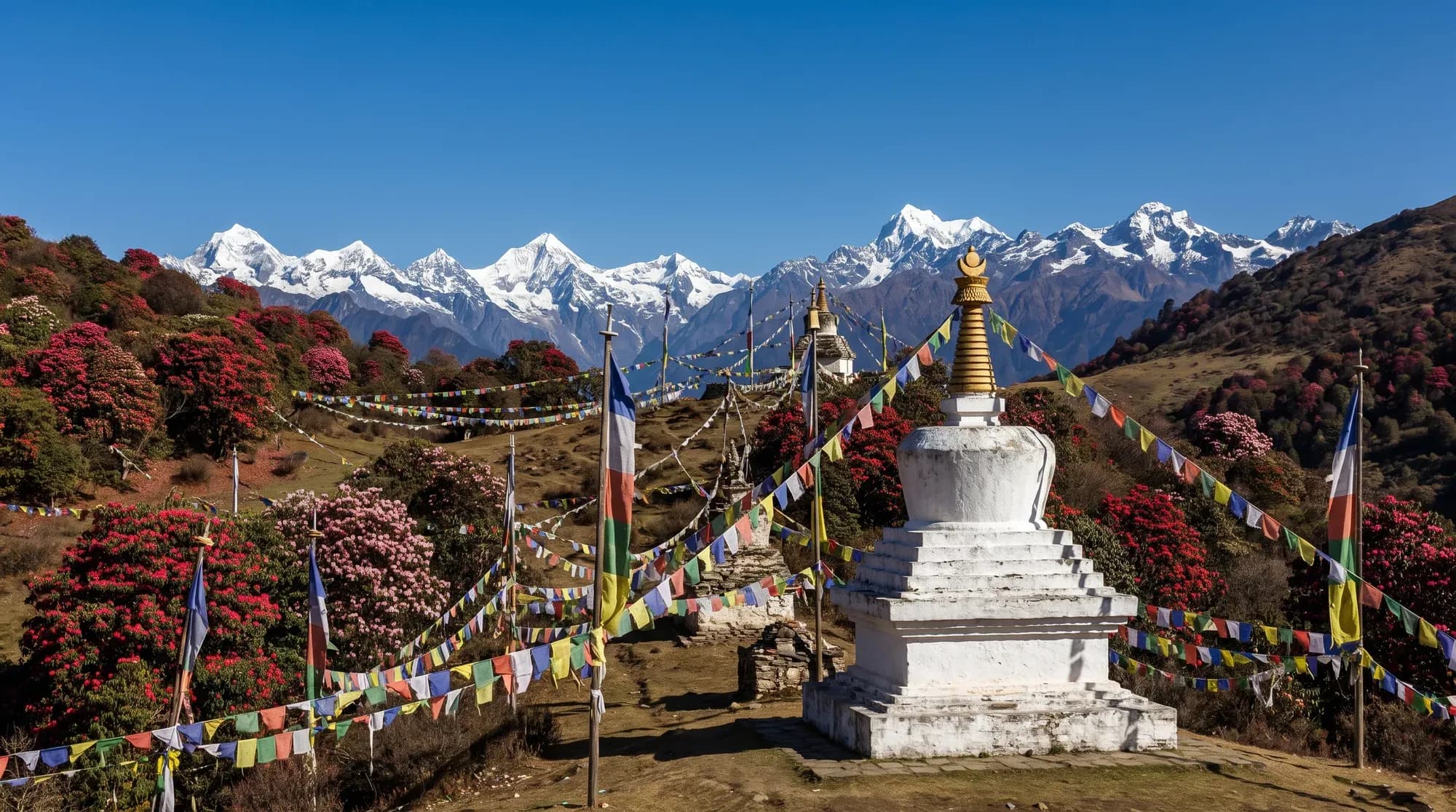
The best time to visit Bhutan
The best time to visit Bhutan is spring (March to May) and autumn (September to November). Spring brings rhododendrons and the Paro Tshechu; autumn has the clearest Himalayan views and the Thimphu Tshechu. Winter (December to February) is cold, dry and quiet, and the summer monsoon (June to August) is lush but wet.
- Best overall
- October–November
- Flowers & festivals
- March–May
- Quietest
- December–February
- Monsoon
- June–August
Bhutan's seasons at a glance
| Season | Weather | Why go |
|---|---|---|
| Spring (Mar–May) | Mild, sunny days; some haze by May | Rhododendrons in bloom, Paro Tshechu, good trekking |
| Summer (Jun–Aug) | Monsoon: warm, wet, lush | Green valleys, fewer visitors, lower demand |
| Autumn (Sep–Nov) | Clear, crisp and dry | Best mountain views, Thimphu Tshechu, peak trekking |
| Winter (Dec–Feb) | Cold nights, clear sunny days | Black-necked cranes, quiet sites, Punakha festivals |
Our recommendation: spring and autumn
Spring and autumn are the two seasons we recommend most. Here's why each one is special.
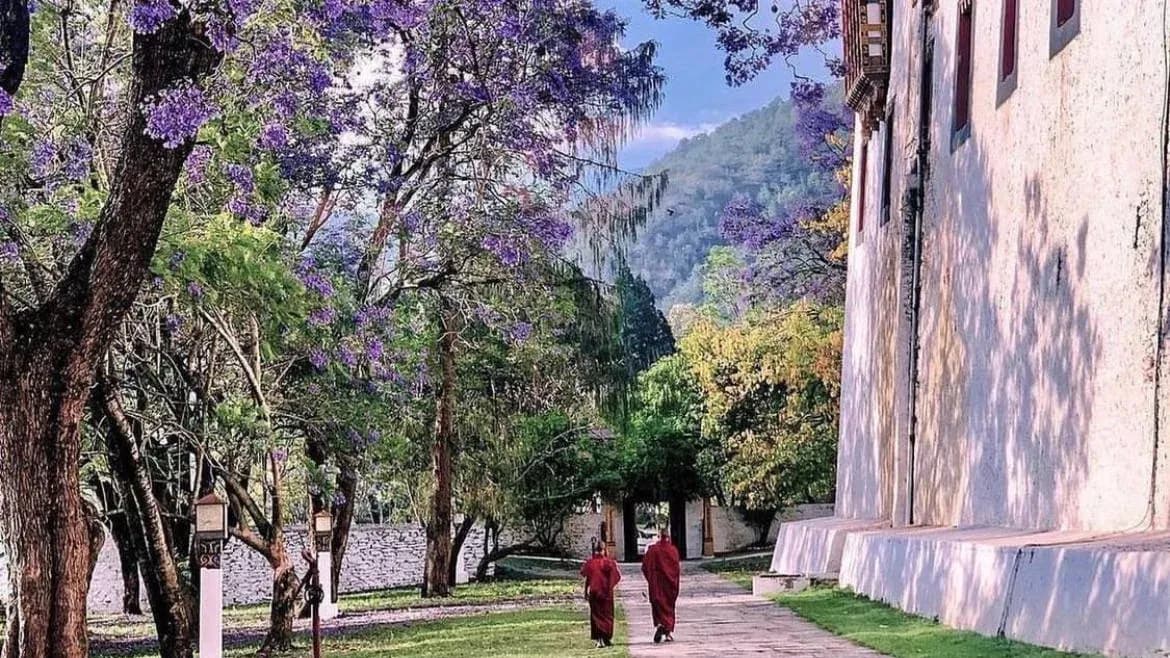
Why we recommend spring (March to May)
Spring is one of the best times to visit Bhutan because the valleys come alive with flowers, fresh greenery and the energy of a new season. For travellers who enjoy nature, walking and cultural experiences, it is a beautiful time to explore.
- 1
The mountainsides burst into colour.
Rhododendrons bloom at different elevations as spring progresses, while flowering trees brighten the valleys. Forest walks become especially rewarding, with splashes of colour along the trails.
- 2
The countryside feels fresh and full of life.
Fields begin turning green, trees put out new leaves, and village life follows the rhythms of planting. Walking through these landscapes gives travellers a lovely glimpse of Bhutan beyond its famous monuments.
- 3
The weather invites you outdoors.
Spring generally brings milder days, making it appealing for Tiger’s Nest, village walks and monastery visits.
- 4
Festivals bring Bhutanese traditions to life.
The Paro Tshechu is a major spring highlight. Sacred mask dances, beautiful traditional dress and families gathering for blessings give visitors an opportunity to witness Bhutan’s living spiritual heritage. Its dates vary each year, so the journey should be planned around the confirmed calendar.
- 5
It suits a gentle, meaningful pace.
A morning forest walk, a farmhouse lunch, an afternoon monastery visit and time to relax: spring lends itself beautifully to the journeys we create. Guests can combine the highlights with quieter moments of connection.
- 6
It is especially lovely for photography and nature lovers.
Flowers, green valleys, traditional architecture and mountain scenery offer wonderful variety. Clear mornings can reveal Himalayan views, although visibility changes with the weather.
The strongest reason to choose spring is the feeling of Bhutan awakening around them. Autumn offers golden harvest landscapes; spring offers blossoms, renewal and fresh green valleys, an especially beautiful setting for a first journey to Bhutan.
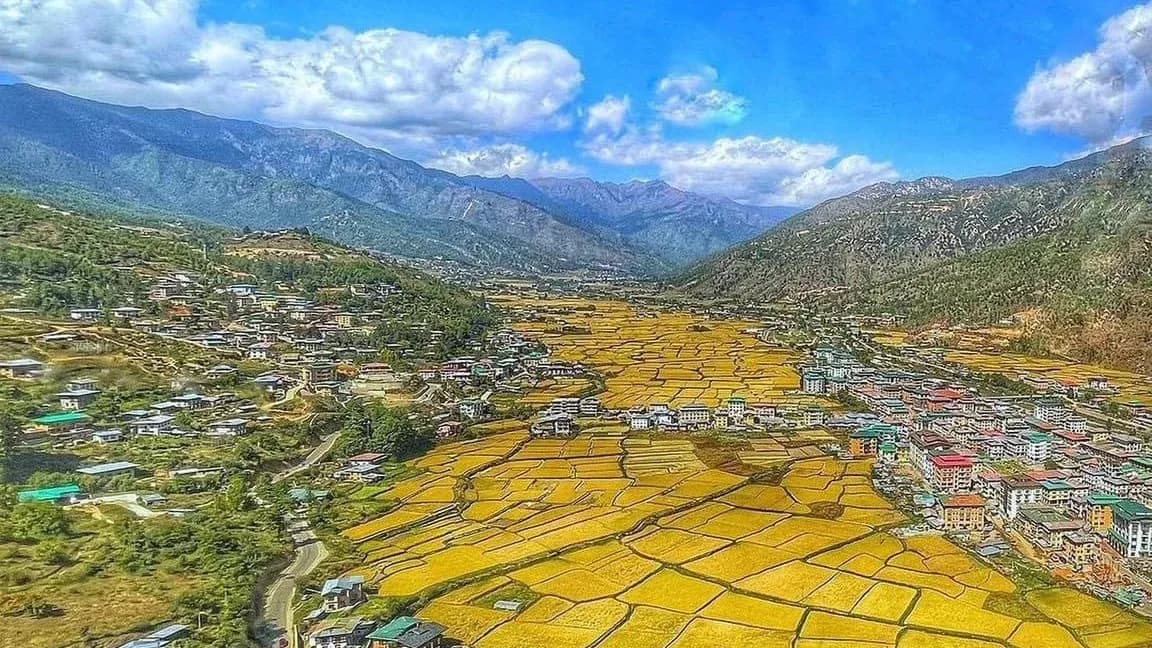
Why we recommend autumn (September to November)
Autumn brings together so much of what makes Bhutan special: clear mountain views, golden valleys, rewarding walks and living traditions. For the slow, meaningful journeys we create, it is one of the strongest seasons to recommend.
- 1
The mountains become part of the journey.
As the monsoon retreats, autumn generally brings clearer skies and better visibility. On a clear day, the Himalayan panorama at Dochula becomes a memorable experience in itself. Late September through November is the main autumn window, although light rain can still occur.
- 2
The valleys turn golden.
Ripening rice fields in Paro and Punakha bring warmth and colour to the landscape. Traditional farmhouses, forested hills and monasteries look especially beautiful against the harvest scenery. Travellers can experience Bhutan through village walks and everyday rural life, alongside its famous landmarks.
- 3
It is a wonderful season to explore on foot.
Pleasant autumn weather makes walking particularly appealing, whether guests choose Tiger’s Nest, forest paths or longer valley hikes. Bhutan’s official tourism guidance identifies autumn as a popular season with generally pleasant conditions, although occasional showers remain possible.
- 4
Festivals give travellers a deeper connection to Bhutan.
Autumn offers opportunities to experience religious festivals, where sacred dances and community gatherings reveal traditions that remain part of daily life. The right festival depends on the itinerary and that year’s calendar.
- 5
The season suits the experiences you will remember most.
A forest walk followed by a farmhouse meal. Time for meditation in a monastery. A warm evening after exploring the valley. The lasting impression comes from the combination of Bhutan’s beauty, thoughtful planning and genuine care.
Our strongest reason for recommending autumn is this: travellers can enjoy Bhutan’s scenery and its culture together, at a comfortable walking pace. October is a particularly attractive choice for that balance; later autumn becomes colder, and popular dates need advance planning. Spring remains equally compelling for guests who love flowers and fresh greenery.
Best time for trekking and wildlife
- Trekking: March–May and mid-September to mid-November; monsoon rain and winter snow close the high passes
- Snowman Trek: a short window, usually in October
- Black-necked cranes: late October to February in the Phobjikha valley
- Rafting: March–April and November–December
Bhutan month by month
Festival dates for the next twelve months, from our festival calendar.
January
Very quiet
Weather: Cold, dry and clear; frosty nights
Highlights: Crisp mountain views; cranes in Phobjikha
February
Quiet
Weather: Cold and clear, warming late in the month
Highlights: Punakha Drubchen; Losar (lunar new year)
Festivals: Punakha Drubchen (13–15 Feb 2027) · Punakha Tshechu (16–18 Feb 2027) · Chorten Kora (20 Feb 2027)
March
Busy by late March
Weather: Mild days, cool nights
Highlights: Rhododendrons begin; Paro Tshechu in some years
Festivals: Chorten Kora (Dakpa Kora) (8 Mar 2027) · Gomphu Kora (16–18 Mar 2027) · Paro Tshechu (18–22 Mar 2027)
April
Busy
Weather: Warm days, flowers everywhere, some haze
Highlights: Rhododendrons in full bloom; spring festivals
Festivals: Ura Yakchoe (18–22 Apr 2027) · Rhododendron Festival (22–23 Apr 2027)
May
Moderate
Weather: Warm and greener; afternoon showers begin
Highlights: Late spring treks; Ura Yakchoe in some years
June
Quiet
Weather: Monsoon arrives; warm and lush
Highlights: Bumthang festivals; green valleys
July
Very quiet
Weather: Peak monsoon; rain and cloud
Highlights: Lush landscapes; low season
August
Quiet
Weather: Monsoon easing towards month-end
Highlights: Quiet valleys and forests
September
Busy late month
Weather: Rain clears; warm and green
Highlights: Thimphu Tshechu in some years; trekking resumes
October
Busiest
Weather: Clear, crisp and dry, with the best views
Highlights: Autumn festivals; peak trekking; Snowman window
Festivals: Thimphu Tshechu (10–12 Oct 2027) · Jomolhari Mountain Festival (14–15 Oct 2027) · Royal Highland Festival (23–24 Oct 2027)
November
Busy early month
Weather: Clear days, cold nights
Highlights: Black-necked cranes arrive; crane festival
Festivals: Black-necked Crane Festival (11 Nov 2026) · Black-necked Crane Festival (11 Nov 2027)
December
Quiet
Weather: Cold, dry and sunny
Highlights: Druk Wangyel festival at Dochula (13 Dec)
Festivals: Druk Wangyel Tshechu (13 Dec 2026)
Best time to visit Bhutan FAQs
Your questions, answered
Still wondering about something? Ask our Thimphu team directly. We're happy to help.
Ask us on WhatsAppOctober is the best single month: clear skies, dry trails and the Thimphu Tshechu. April is the spring favourite, with rhododendrons in bloom and the Paro Tshechu.
It can be: valleys are at their greenest and sites are quiet, but expect rain, cloud over the mountains and occasional road delays. It's not a good time for trekking.
Nights are cold, often below freezing in Paro and Thimphu, but days are sunny and clear. The lower Punakha valley stays mild, and it's the season of the black-necked cranes.
Five to seven days covers Paro, Thimphu and Punakha with the Tiger's Nest hike; ten to fourteen lets you add Phobjikha, Bumthang, the east or a trek.
Begin your journey
Let's design your Bhutan
Tell us a little about the trip you're dreaming of. A real travel specialist in Thimphu (not a call centre) will reply within a day with ideas and an honest, all-inclusive price.
Send an enquiry
No obligation. It's just the start of a conversation.