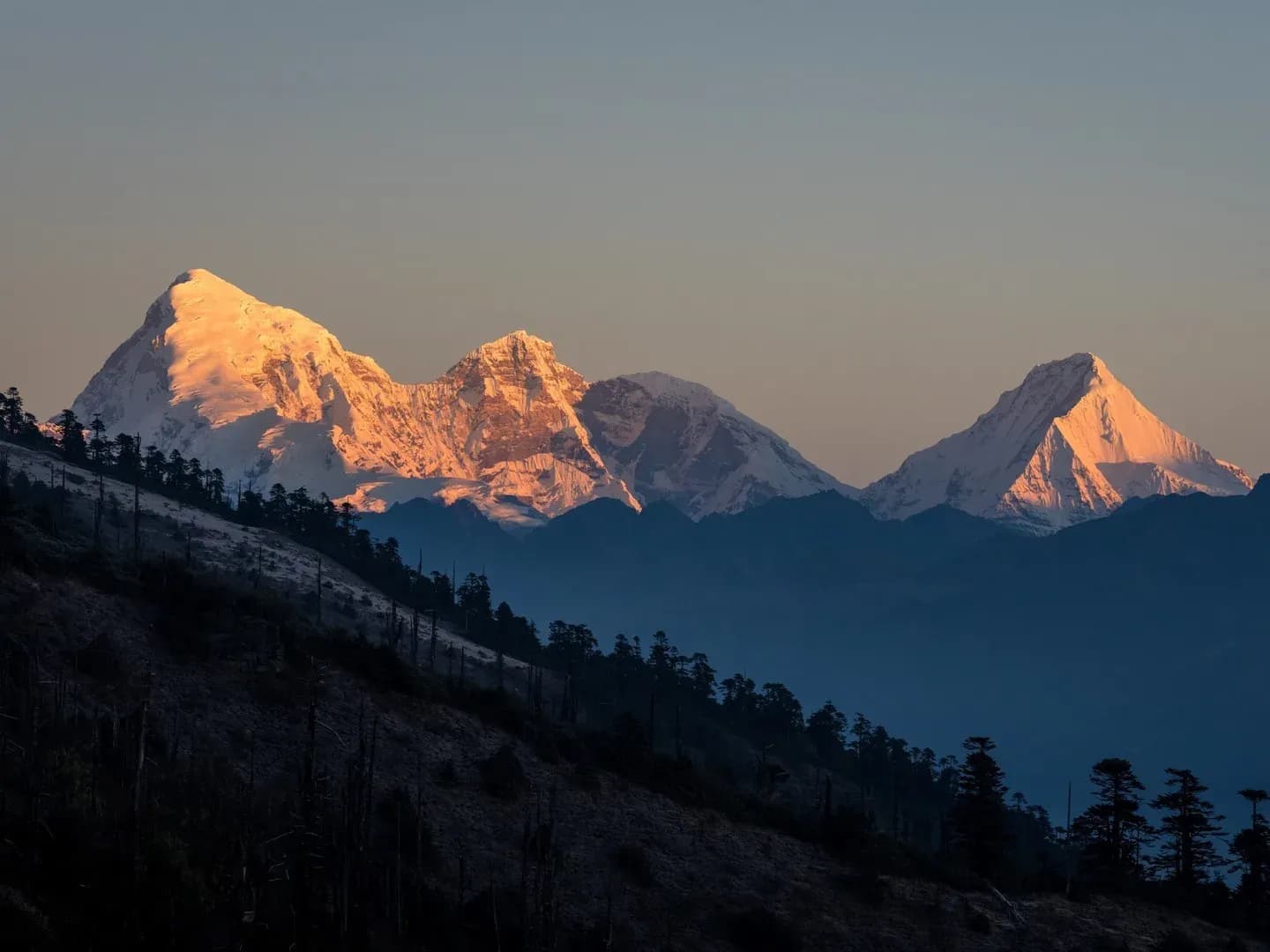
About Bhutan
Things to do in Bhutan, and places to visit
Bhutan is a small Himalayan kingdom between India and China (Tibet), about the size of Switzerland, with some 780,000 people. The best things to do are hiking to the Tiger's Nest in Paro, exploring the capital Thimphu and Punakha Dzong, crossing Dochula Pass, seeing the cranes of Phobjikha and, with more time, the temples of Bumthang and the remote east.
Western Bhutan
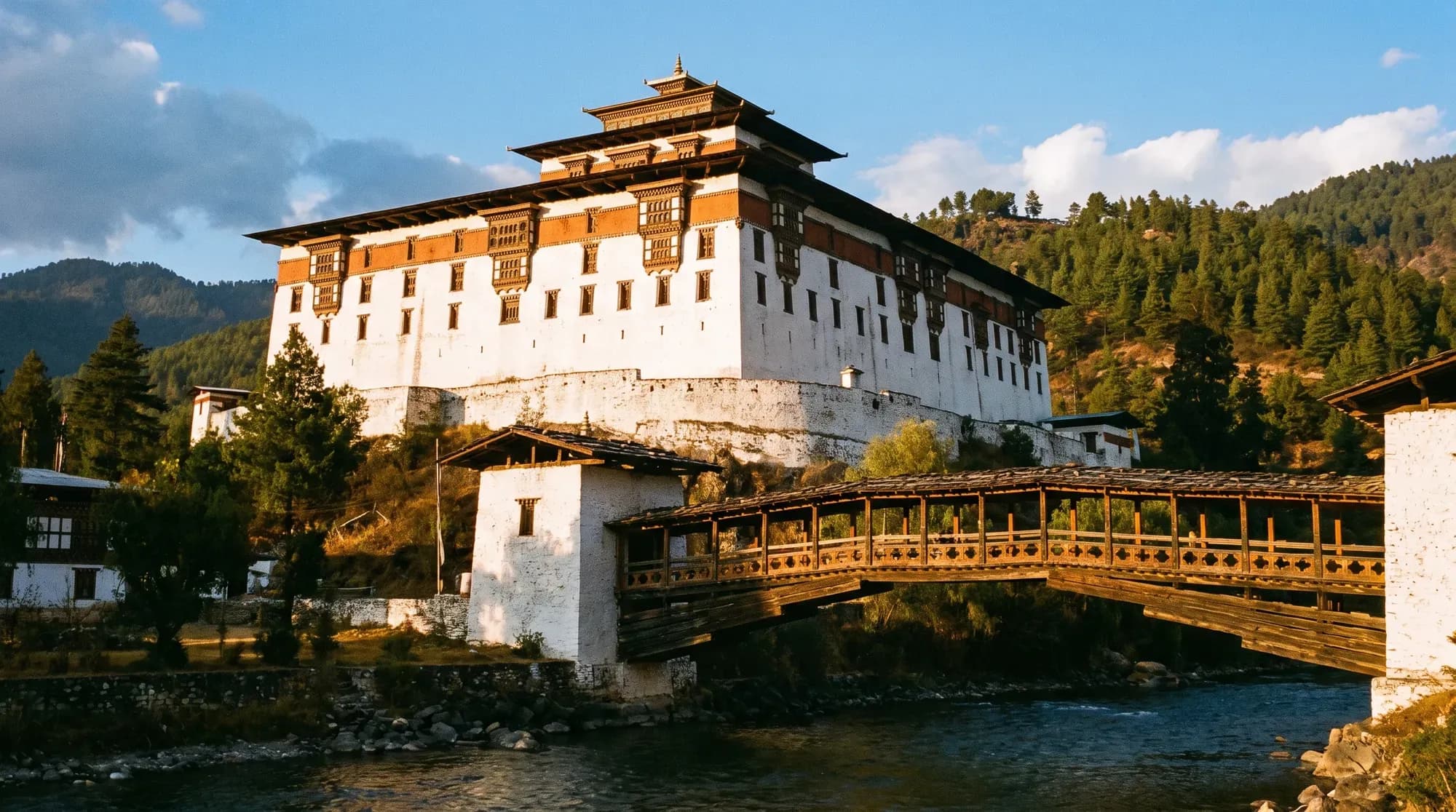
Paro
Bhutan's only international airport, a great fortress, the oldest temples and the trail to the Tiger's Nest.
Explore Paro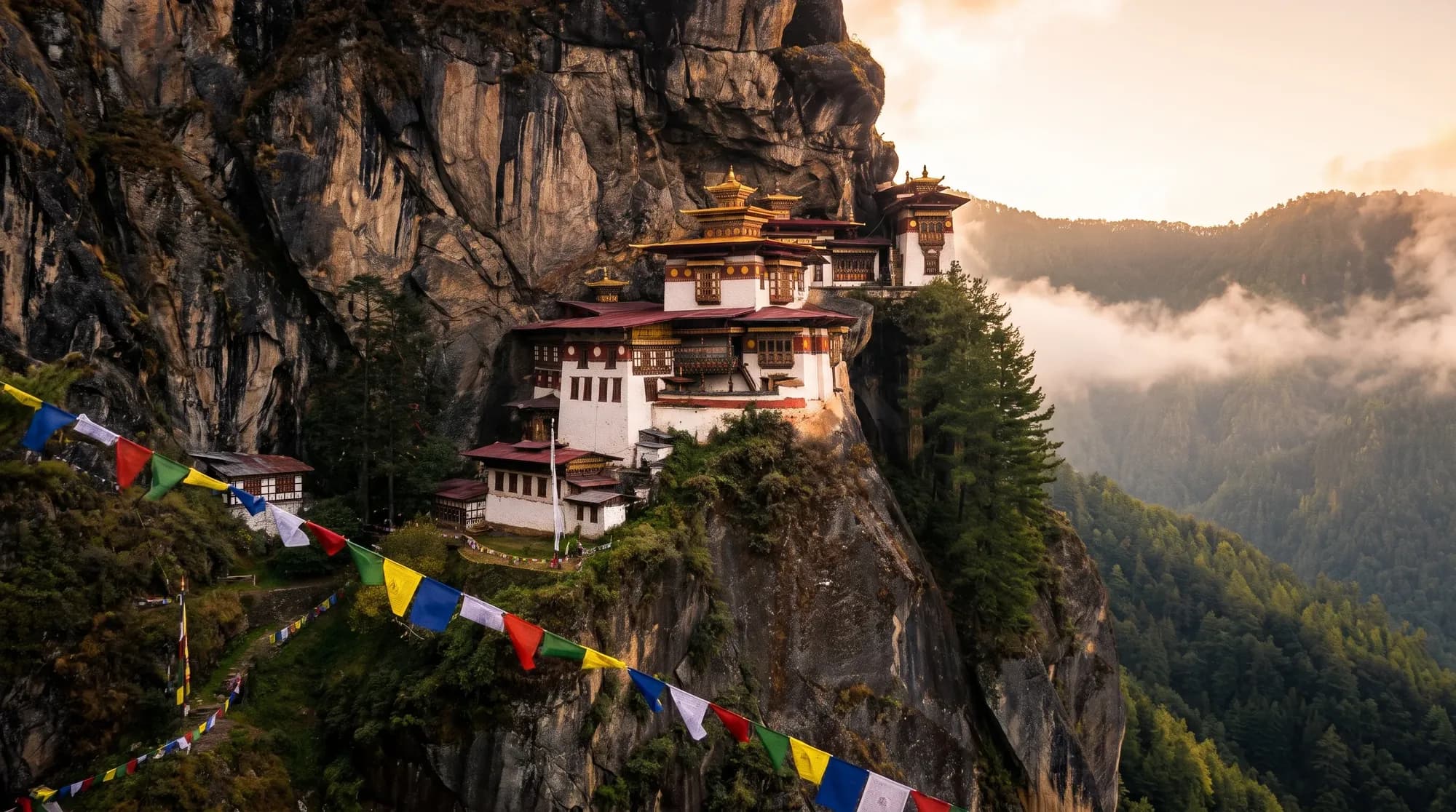
Tiger's Nest
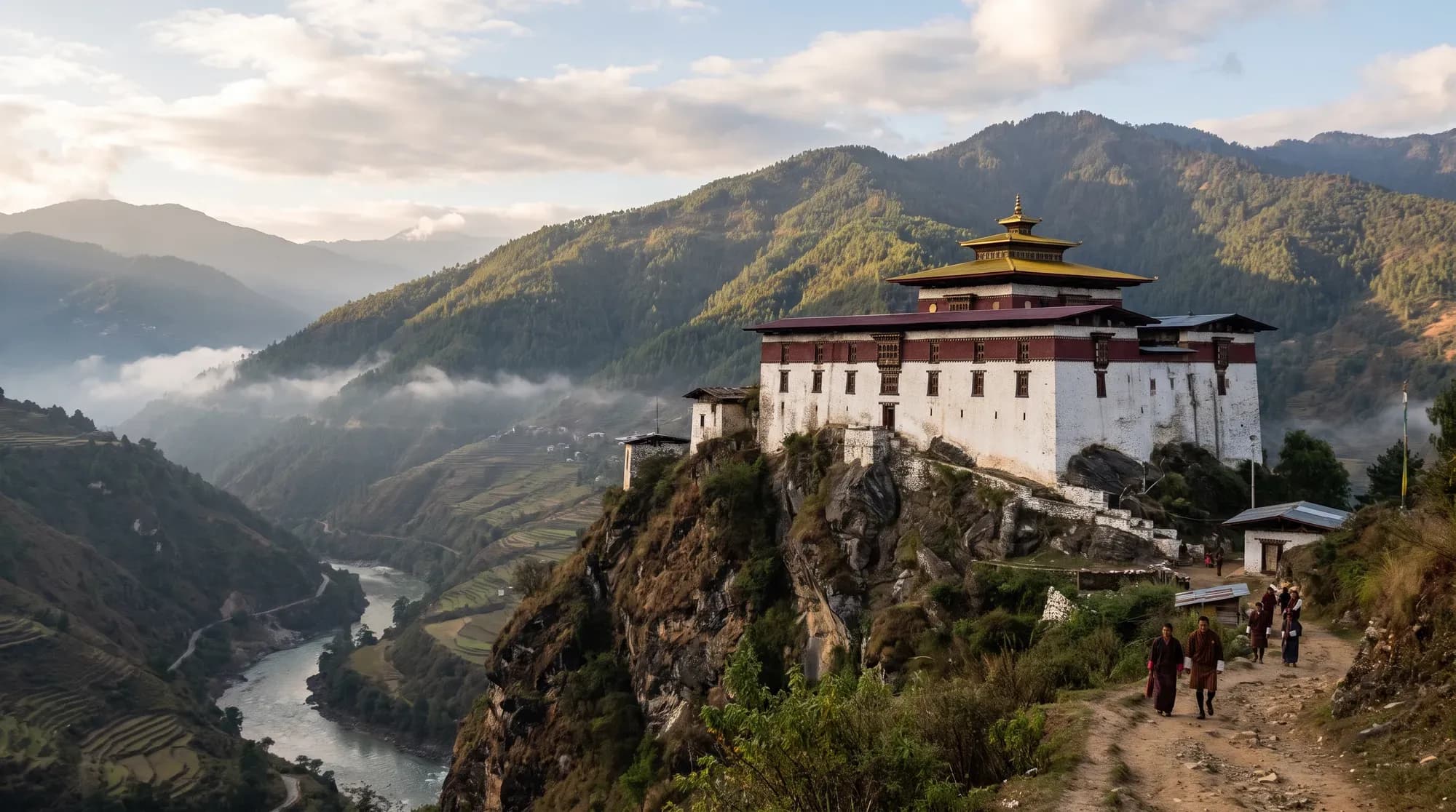
Bhutan's most famous monastery, built into a cliff above the Paro valley, reached on a half-day hike through pine forest.
Explore Tiger's Nest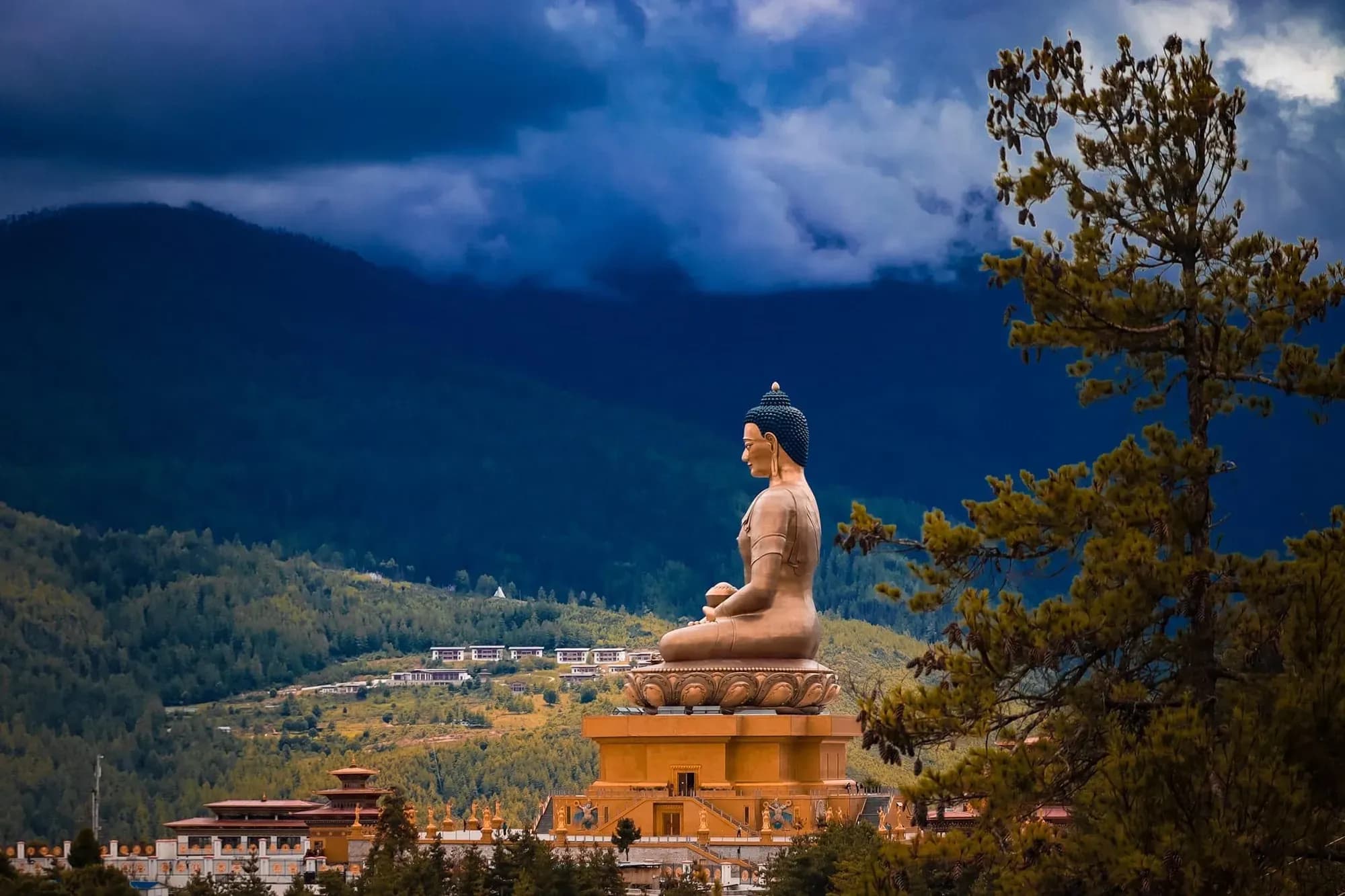
Thimphu
The capital: a giant Buddha, the seat of government, weekend markets and the crafts school. And no traffic lights.
Explore Thimphu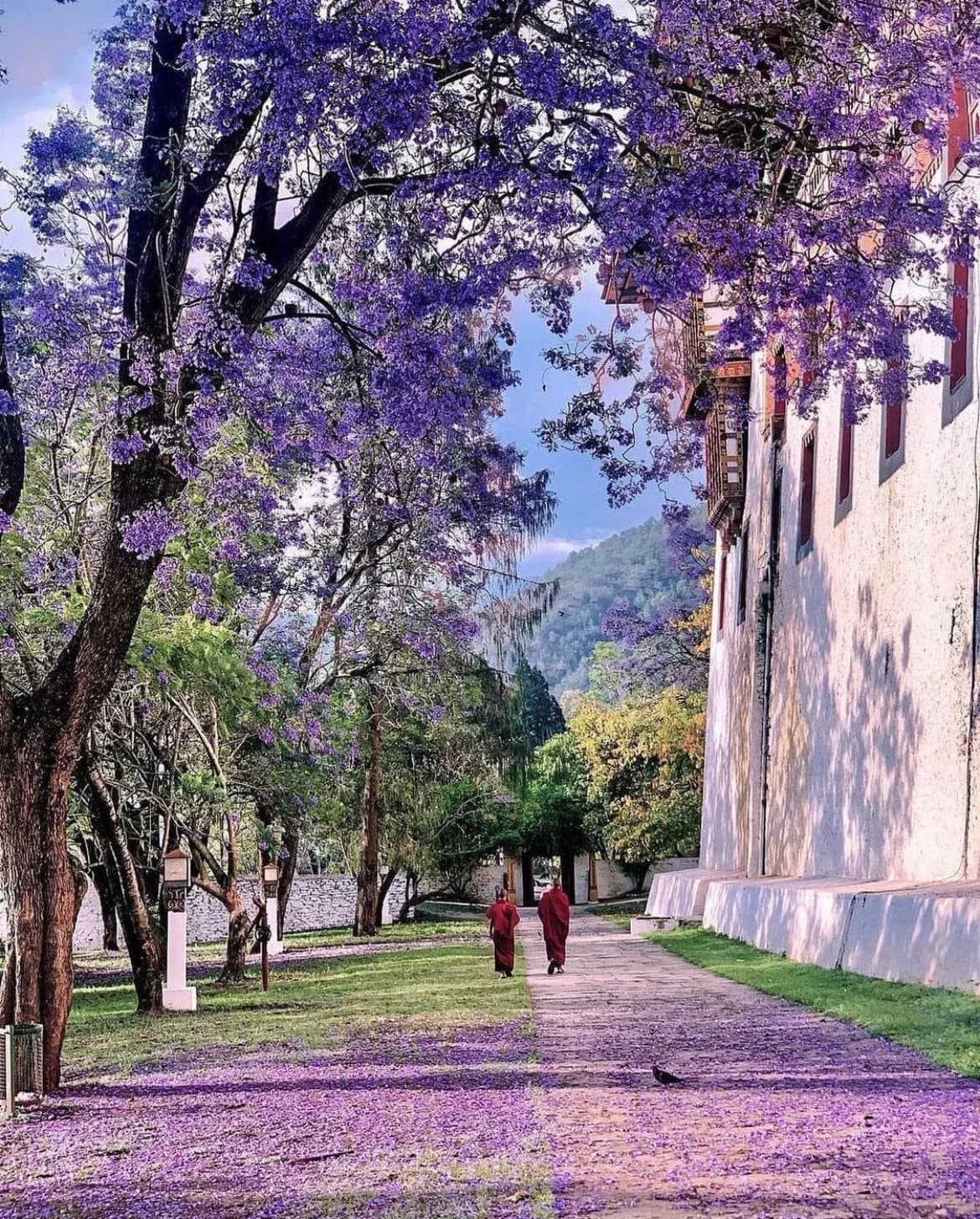
Punakha
The most beautiful dzong in Bhutan, where two rivers meet, in a warm valley of rice fields and jacaranda.
Explore Punakha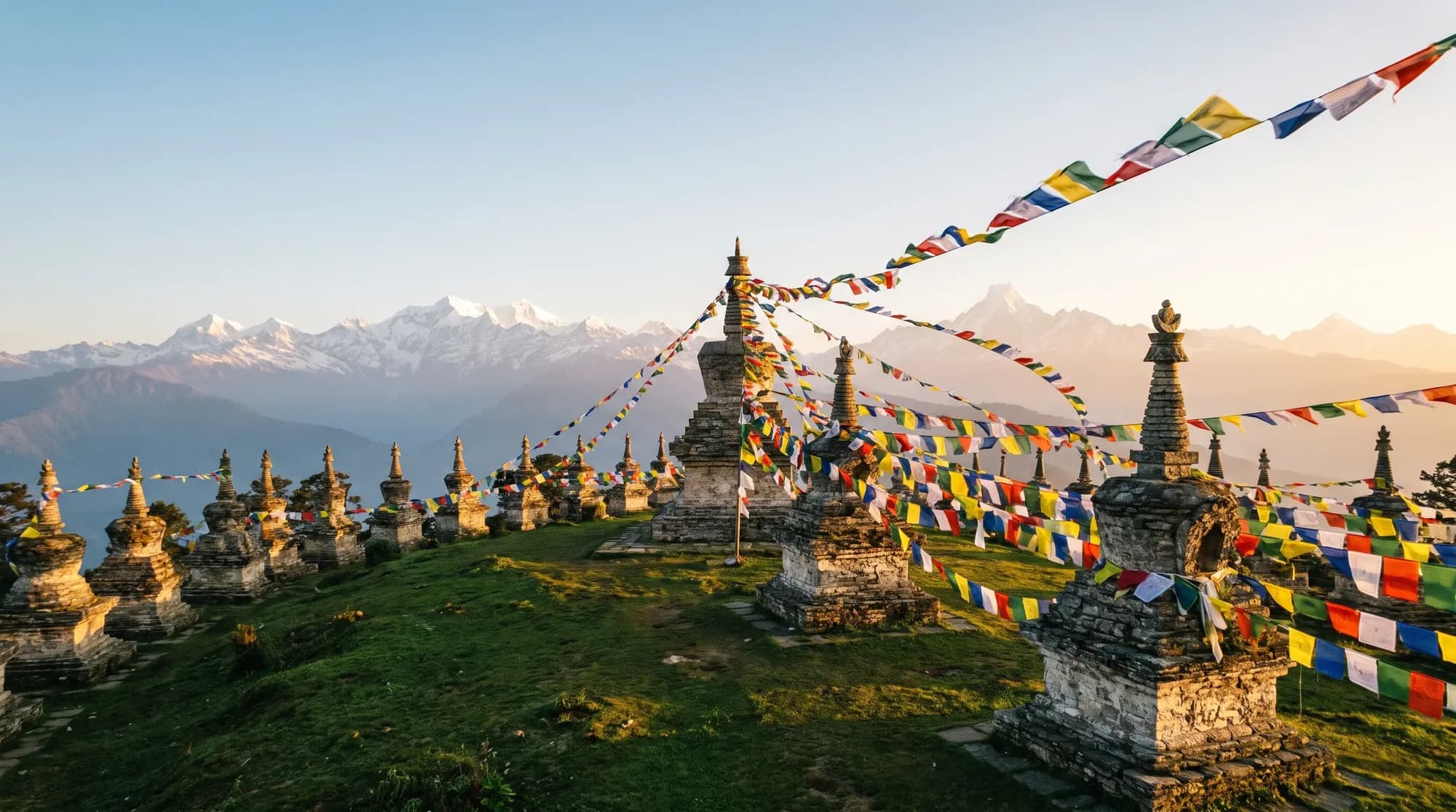
Dochula Pass
A 3,100 m pass crowned by 108 chortens, with a panorama of Himalayan peaks on clear days.
Explore Dochula Pass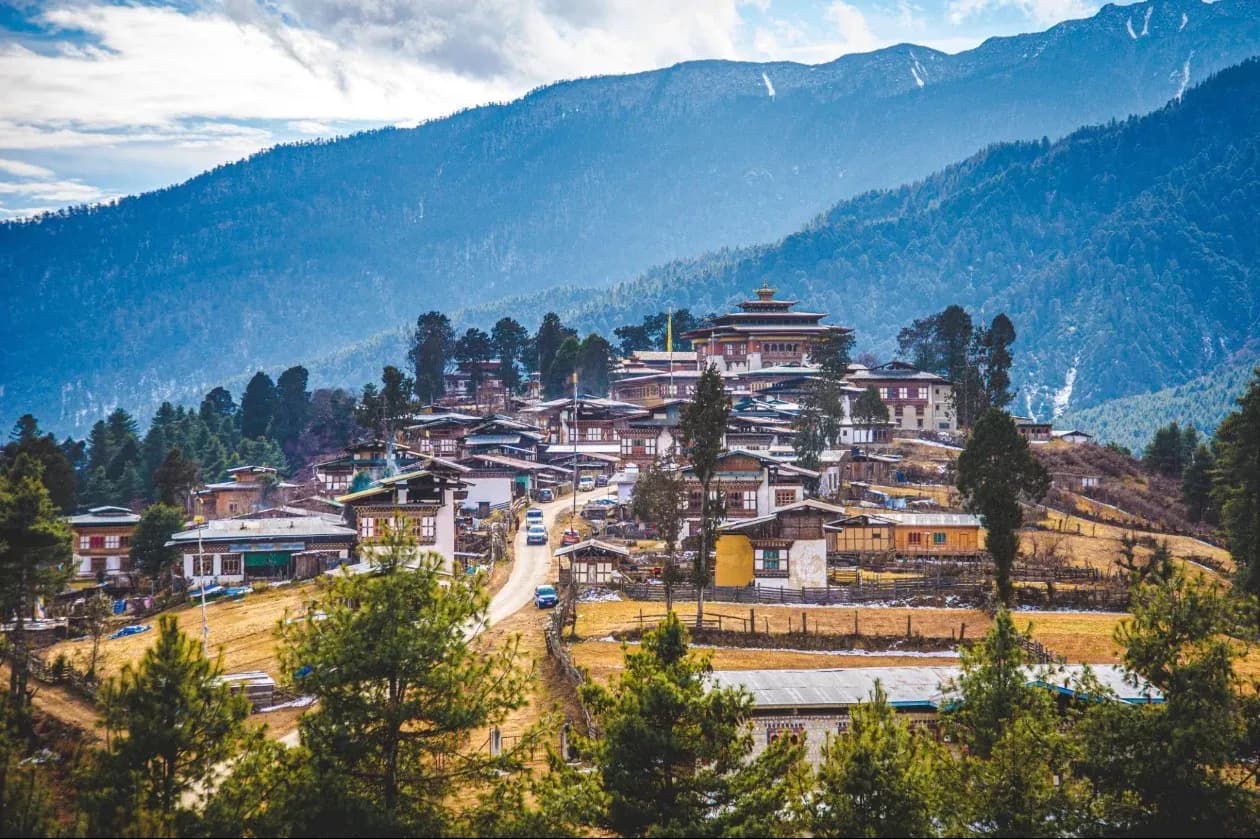
Phobjikha Valley
A wide glacial valley where rare black-necked cranes spend the winter, below the hilltop Gangtey Monastery.
Explore Phobjikha Valley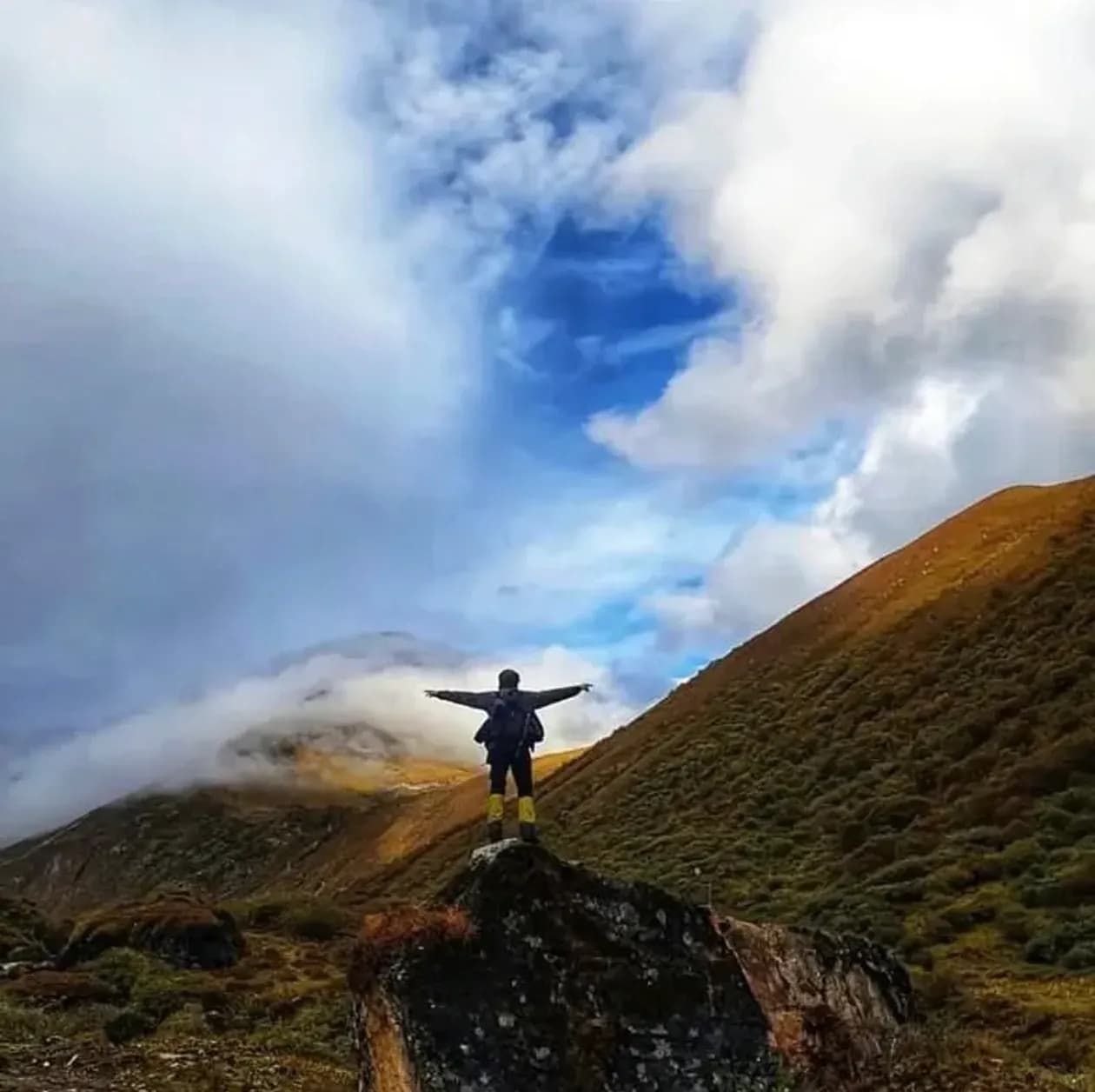
Haa Valley
A quiet valley over Chele La near the Tibetan border, opened to visitors only in 2002: twin temples, homestays and high walks.
Explore Haa Valley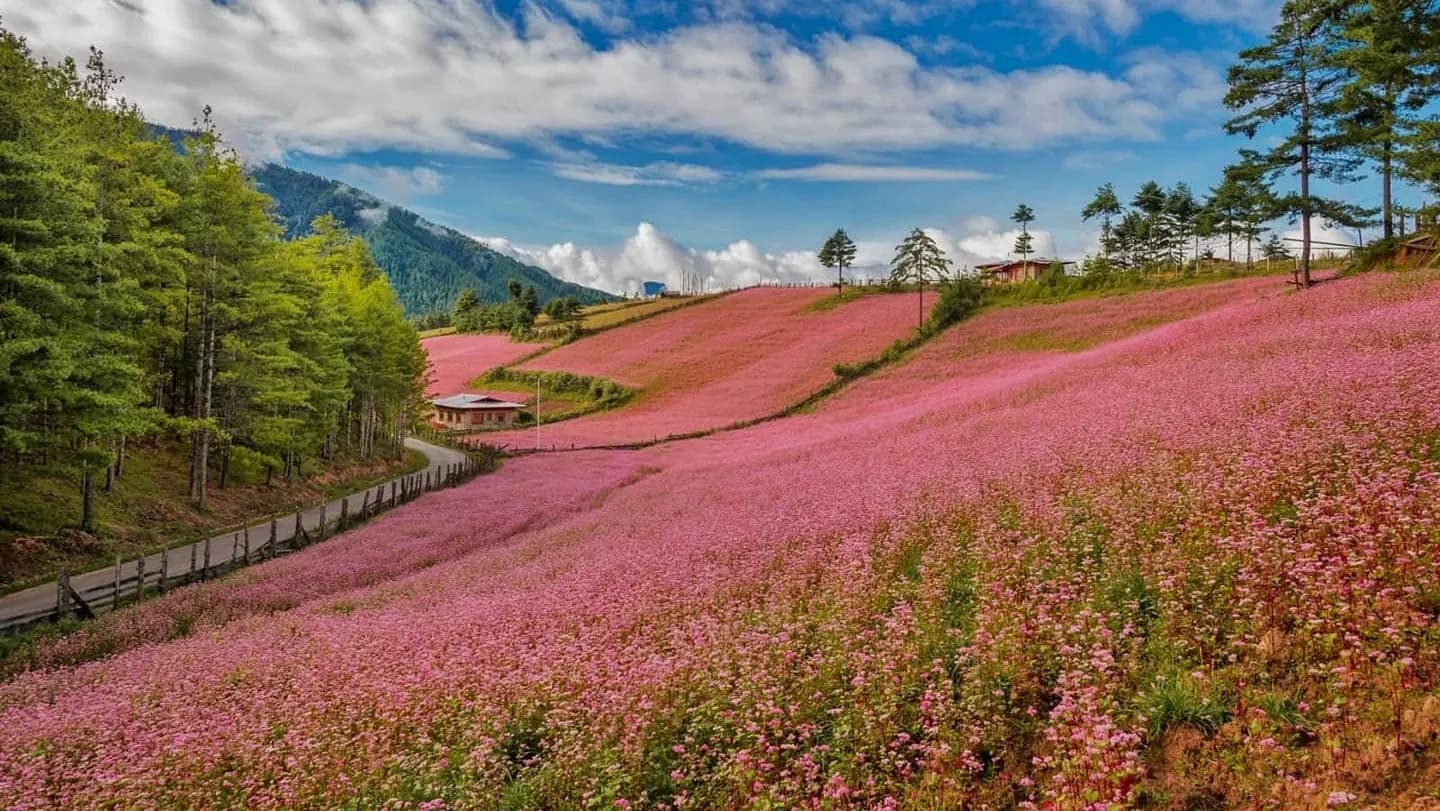
Facts about Bhutan
The Land of the Thunder Dragon
Where is Bhutan?
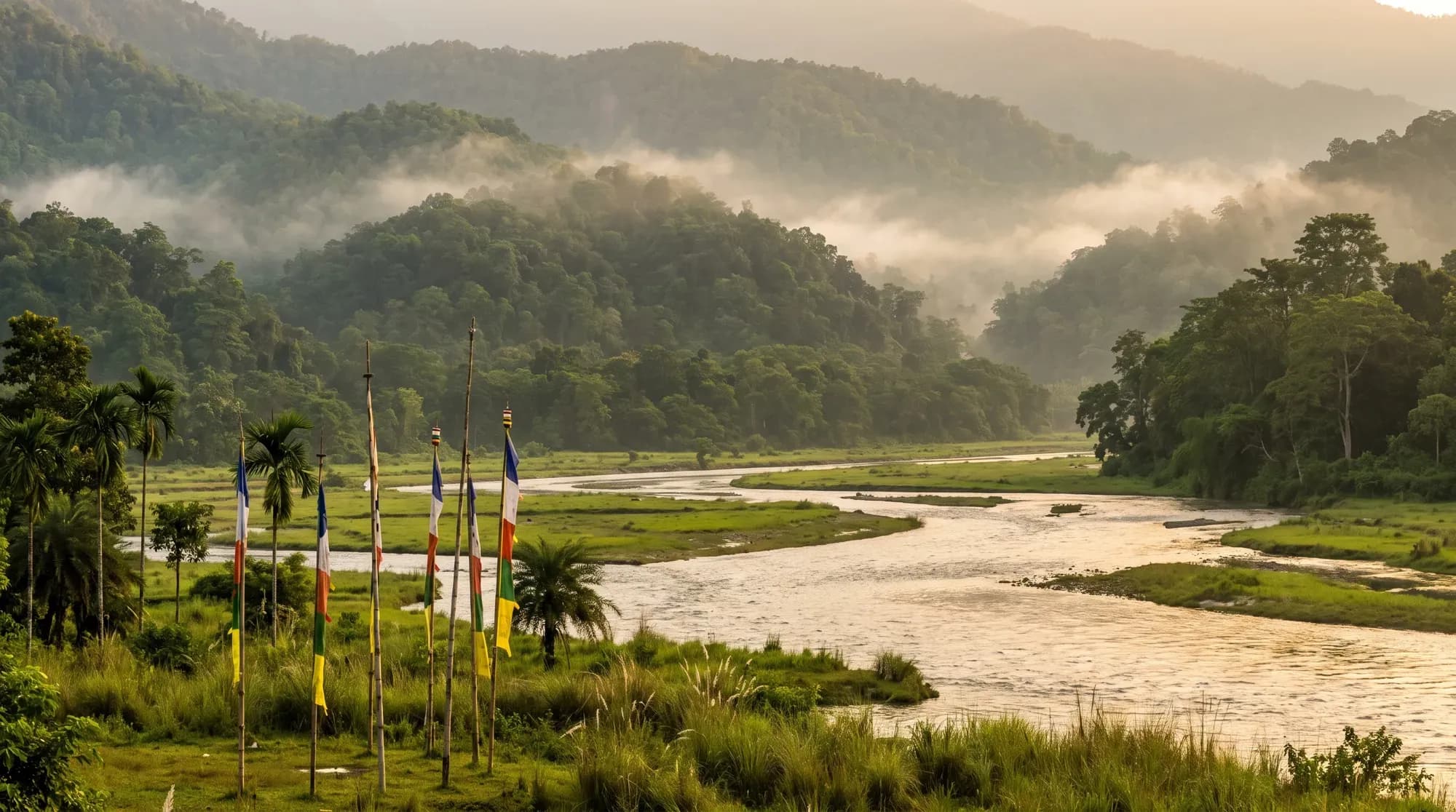
Bhutan lies in the eastern Himalayas, landlocked between the Tibet region of China to the north and the Indian states of Sikkim, West Bengal, Assam and Arunachal Pradesh to the west, south and east. In little more than 150 km the land climbs from subtropical plains near India, under 200 m, to glaciated peaks over 7,000 m on the Tibetan border.
Bhutanese call their country Druk Yul, the Land of the Thunder Dragon. Most visitors fly into Paro from Delhi, Kolkata, Kathmandu, Bangkok or Singapore, or cross the land border from India.
An independent kingdom
Bhutan is a sovereign country, part of neither India nor China, and has been a member of the United Nations since 1971. It was unified in the 17th century by Zhabdrung Ngawang Namgyal, who built the great dzongs that still govern each district. In 1907 Ugyen Wangchuck was chosen as the first hereditary king; the fifth, Jigme Khesar Namgyel Wangchuck, has reigned since 2006.
In 2008 the monarchy voluntarily became a parliamentary democracy under a written constitution. Bhutan keeps close ties with India, its main trading partner, while guarding its own culture carefully. National dress is worn at work and in dzongs, and traditional architecture is required for new buildings.
Language and religion
The national language is Dzongkha, related to Tibetan. Around nineteen languages are spoken across the country. Tshangla in the east and Nepali (Lhotshamkha) in the south are the largest after Dzongkha, and English is the language of schools and government, so it is widely spoken.
Vajrayana (Tantric) Buddhism of the Drukpa Kagyu and Nyingma schools is the state religion, followed by about three-quarters of Bhutanese; most of the rest, mainly in the south, are Hindu. Religion is part of daily life: prayer flags on every ridge, butter lamps in every home, and tshechu festivals in every district.
Gross National Happiness
In the 1970s the Fourth King, Jigme Singye Wangchuck, declared that Gross National Happiness was more important than Gross National Product. GNH rests on four pillars (sustainable development, conservation of the environment, preservation of culture and good governance) and is measured across nine domains, from health and education to time use and community life.
In practice it shapes policy: the constitution requires at least 60% of the land to stay forested, the country absorbs more carbon than it emits, climbing peaks above 6,000 m is banned out of respect for the mountain deities, and healthcare and education are free.
High Value, Low Volume tourism
Bhutan deliberately limits mass tourism. Instead of cheap package trips, visitors pay a Sustainable Development Fee, currently USD 100 per adult per night, which funds free healthcare, education and conservation. Travel is private and guided, and there are no crowds of coach tours.
It makes Bhutan more expensive than its neighbours, but it is also why the country feels so unspoiled. Read our guides to the Bhutan visa and to what a Bhutan trip costs for the details.
Is Bhutan safe?
Bhutan is one of the safest countries in Asia to travel in. Violent crime against visitors is very rare, people are welcoming, and you travel with your own guide and driver. The real hazards are practical: long, winding mountain roads, the altitude on passes and treks, and stomach upsets. Your guide will help you manage all of them.
About Bhutan
Your questions, answered
Still wondering about something? Ask our Thimphu team directly. We're happy to help.
Ask us on WhatsAppNeither. Bhutan is an independent kingdom and a member of the United Nations. It borders China (Tibet) to the north and India to the south, east and west, and has especially close ties with India.
Hike to the Tiger's Nest in Paro, visit Punakha Dzong, see the Buddha Dordenma and markets of Thimphu, cross Dochula Pass, watch the cranes in the Phobjikha valley, attend a tshechu festival, stay in a farmhouse and, with more time, explore Bumthang and the east.
Five to seven days covers the highlights of western Bhutan: Paro, the Tiger's Nest, Thimphu, Punakha and Phobjikha. Ten to fourteen days lets you add Bumthang and eastern Bhutan, a trek or a festival.
No. International visitors pay a Sustainable Development Fee of USD 100 per adult per night, plus the cost of their trip. The figure of 1,200 usually refers to the fee for Indian nationals, which is INR 1,200 per night.
Bhutan is a lower-middle-income country that graduated from the UN's list of Least Developed Countries in 2023. Hydropower sold to India is its biggest export; healthcare and education are free, and there is little visible poverty.
Yes, for its Buddhist culture, dramatic dzongs and monasteries, mountain scenery, festivals and the feeling of a country that has chosen its own path. Private, guided travel makes it easy, and the absence of crowds makes it special.
Dzongkha is the national language, and English is widely spoken because it is used in schools and government. Around nineteen languages are spoken in total, including Tshangla in the east and Nepali in the south.
Ready to see it for yourself?
Begin your journey
Let's design your Bhutan
Tell us a little about the trip you're dreaming of. A real travel specialist in Thimphu (not a call centre) will reply within a day with ideas and an honest, all-inclusive price.
Send an enquiry
No obligation. It's just the start of a conversation.