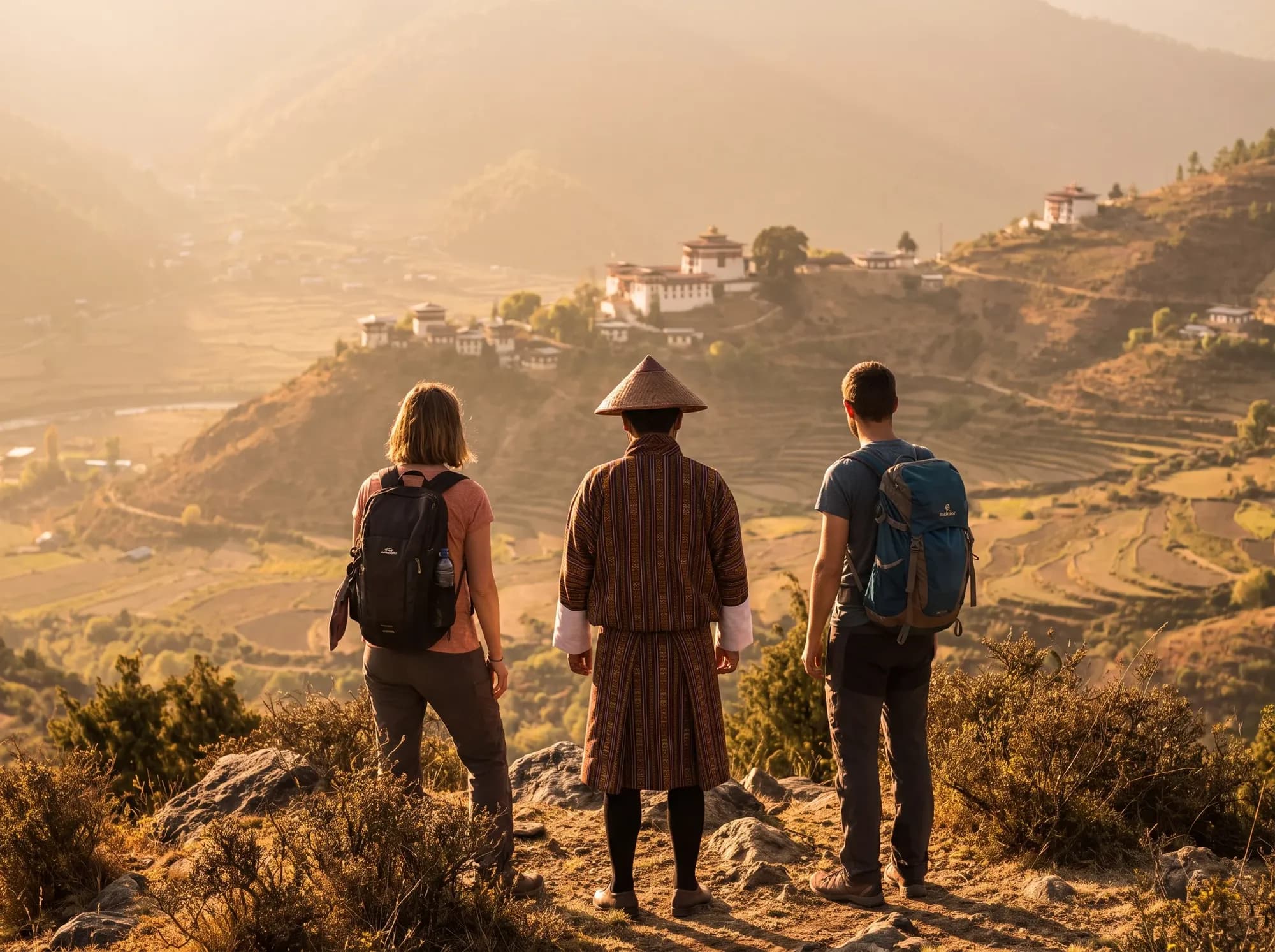
Standing on a mountain pass among fluttering prayer flags, you'll quickly notice how peaceful Bhutan feels. Travellers stroll through quiet towns, stop to chat with people, and settle into a slower rhythm. That calm isn't just an impression. Here's what travel safety in Bhutan really looks like, from crime to altitude.
Is Bhutan safe for tourists?
Yes. Violent crime is very rare, and tourism is carefully run by the government. Every international visitor travels with a licensed Bhutanese guide, which supports the country's tourism model and gives you a local at your side the whole way. Your guide handles permits and logistics, explains what you're seeing, and often becomes one of the best parts of the trip.
The people are just as reassuring. Bhutanese people are welcoming and happy to chat, and most, especially the younger generation, speak English. Many visitors say it's that warmth, as much as the low crime rate, that makes them feel at ease.
Crime and scams
Violent crime is almost unheard of, and pickpocketing and theft are uncommon compared with most tourist destinations. Take the usual care with your belongings, and keep an eye on them on hikes, where anything dropped can be hard to find again.
The scams common elsewhere in Asia, such as inflated taxi fares or pushy street sellers, are largely absent, because tourism is tightly regulated and shop prices are usually fixed.
Respecting local customs
Feeling at ease also comes from knowing the customs. Ask before photographing people, dress modestly at temples and dzongs, and take off your hat and shoes where asked. Your guide will help with all of this, and you can ask them anything. Our dress code and etiquette guide covers the details.
Health, altitude, food and water
Altitude. Paro and Thimphu sit at 2,200 to 2,300 m, passes go above 3,000 m, and trekking routes go much higher. Drink plenty of water, pace yourself, and tell your guide if you feel dizzy, sick or get a headache, the usual signs of altitude sickness.
Food and water. Restaurants and hotels that cook for visitors keep good hygiene standards. Don't drink tap water: stick to boiled, filtered or bottled water, which hotels provide and your guide carries in the car.
Medical care. Thimphu has the national referral hospital, and district towns have hospitals and clinics, but facilities are basic outside the capital and serious cases may need evacuation abroad. That's why travel insurance covering medical treatment and evacuation is required for your Bhutan visa. Bring any medicines you take, with copies of prescriptions.
Roads and driving
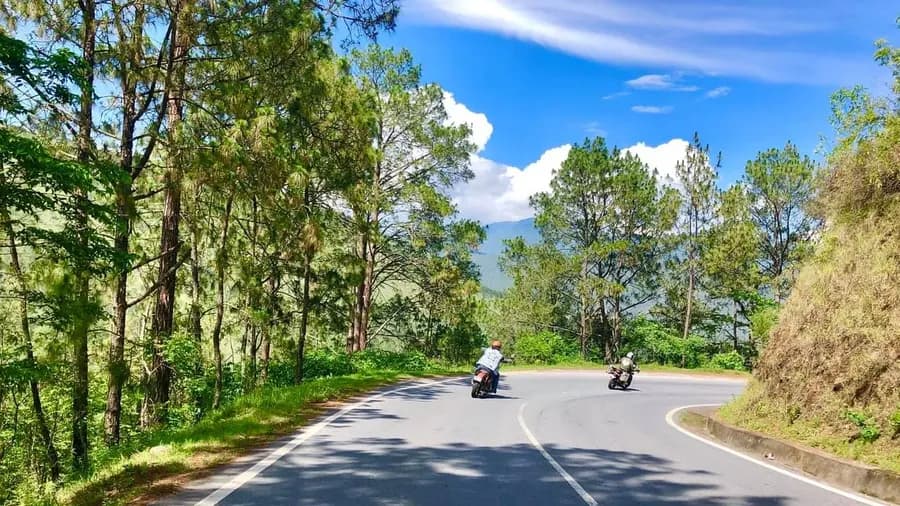
Bhutan's roads are carved into steep mountainsides. They're generally well kept, but bends are sharp and speeds are low, so a drive that looks short on a map can take hours. Weather can slow things further, especially in the summer monsoon, when heavy rain sometimes causes landslides. Experienced local drivers do all the driving, so you can sit back and enjoy the views.
Trekking safety
Mountain weather can change quickly, even mid-trek. Wear proper hiking boots, carry rain gear and warm layers, and follow your guide's advice about turning back. Choosing the right season helps most: spring and autumn are the safest times for high treks. See the best time to visit Bhutan.
Is Bhutan safe for solo travellers?
Very. Because your trip is arranged with a licensed operator, much of the planning is done before you arrive, and travelling solo doesn't mean travelling alone: your guide quickly becomes a familiar face, recommending places to eat, explaining traditions and sharing stories on long drives. If you go exploring a town on your own, people are approachable and happy to point you in the right direction, usually after asking where you're from.
Is Bhutan safe for women?
Yes, Bhutan is generally considered very safe for women, including women travelling alone. Bhutanese culture puts a strong emphasis on courtesy and respect, and harassment is uncommon. Many women travelling alone tell us how comfortable they felt wandering Paro's cafés, browsing Thimphu's vegetable market or chatting with locals. The usual travel precautions still apply.
Practical safety tips
- Carry your passport and a copy of your Bhutan visa.
- Take out travel insurance that covers medical evacuation, especially if you're trekking.
- Pack light layers: mountain mornings are chilly even in spring.
- Drink plenty of water and wear sunscreen; the sun is strong at altitude.
- Bring any medicines you need, as pharmacies outside Thimphu and Paro are small.
- Follow your guide's advice on hikes and at religious sites.
- Check the season's weather before you choose your dates.
Part of Bhutan's reputation comes from the way it welcomes visitors: numbers are managed, guides accompany international travellers, and communities put great weight on respect and hospitality. With a little preparation, you can worry less about safety and enjoy the journey. Before you book, read our Bhutan visa guide, or browse our Bhutan tours, where transport, hotels and an experienced guide are all arranged.
Read next
About the author
Pema · Itinerary designer & travel writer. Pema designs our itineraries and writes our travel guides. She plans each route so the drives, hikes, festival dates and quiet days fit together, and writes about Bhutan the way she'd explain it to a friend visiting for the first time.
Published