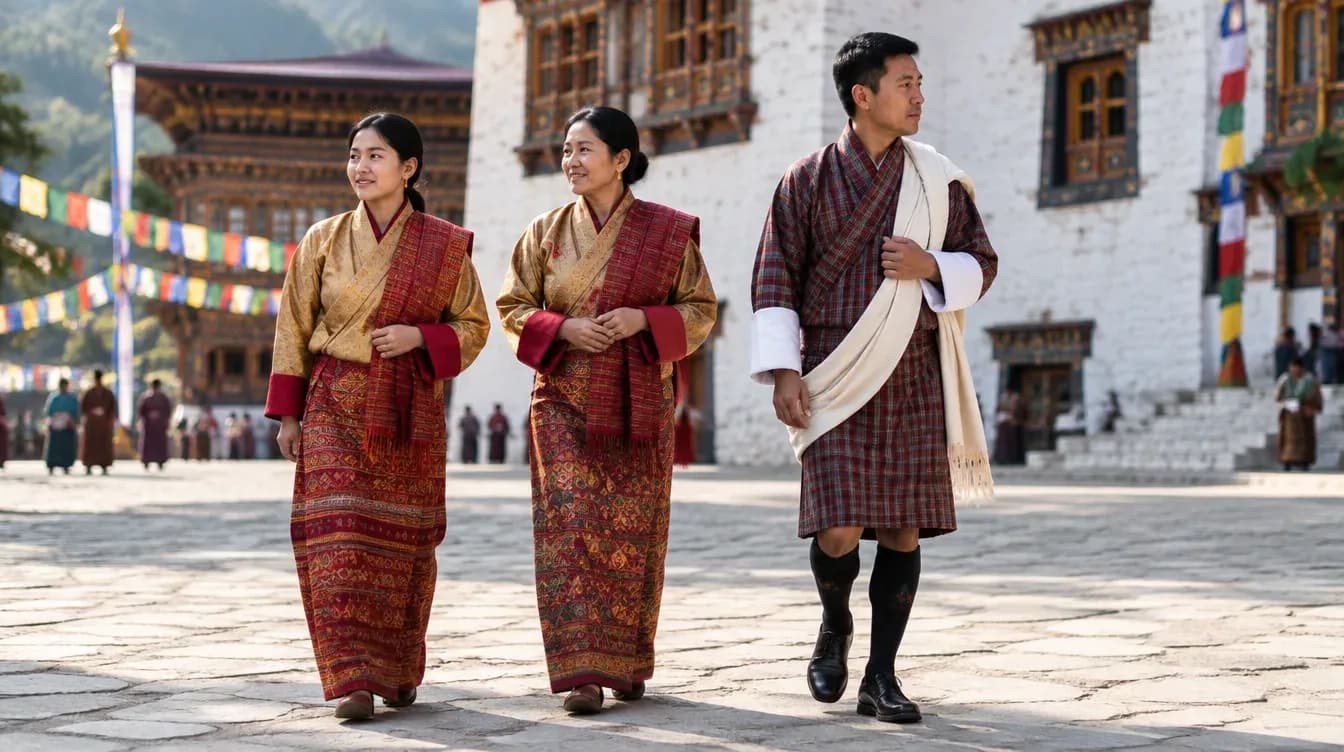
Walk around Thimphu or Paro on a weekday morning and you'll notice something unusual. Schoolchildren, office workers and shopkeepers all go about their day in woven traditional clothes. In many countries national dress is kept for festivals; in Bhutan it's simply what we wear. The further you travel into the countryside, the more of it you'll see.
Why the gho and kira matter
Our national dress has been worn for centuries. Its spread is usually credited to Zhabdrung Ngawang Namgyel, who unified Bhutan in the 17th century and set out customs that gave the young country an identity of its own, distinct from its neighbours.
Today the gho and kira are worn in schools, government offices and every dzong, and they're a real source of pride. For visitors they're often the first thing you notice, and one of the things you remember most.
The kira: what Bhutanese women wear
If you try on a kira for the first time, you'll find it isn't one dress but several pieces worn together. That means you can mix and match them. Ask a Bhutanese woman about her kira and the conversation soon turns to colour combinations, weaves, and which jacket goes with a favourite textile.
Wonju, the inner blouse
The first layer is the wonju, a thin, long-sleeved blouse worn under the kira. It's an essential part of formal dress, though in hot weather and casual settings some women leave it out.
Kira, the woven wrap
The kira itself is an ankle-length rectangle of fabric, handwoven or machine-made. It's folded around the body in a particular way, fastened at the shoulders with a pair of brooches called koma (or, these days, safety pins), and tied at the waist with a woven belt.
Around Thimphu you'll also see the “half kira”: a skirt and jacket that give the same look but close with hooks or Velcro, so they're quicker to put on. Light nylon half kiras are popular in the warmer months.
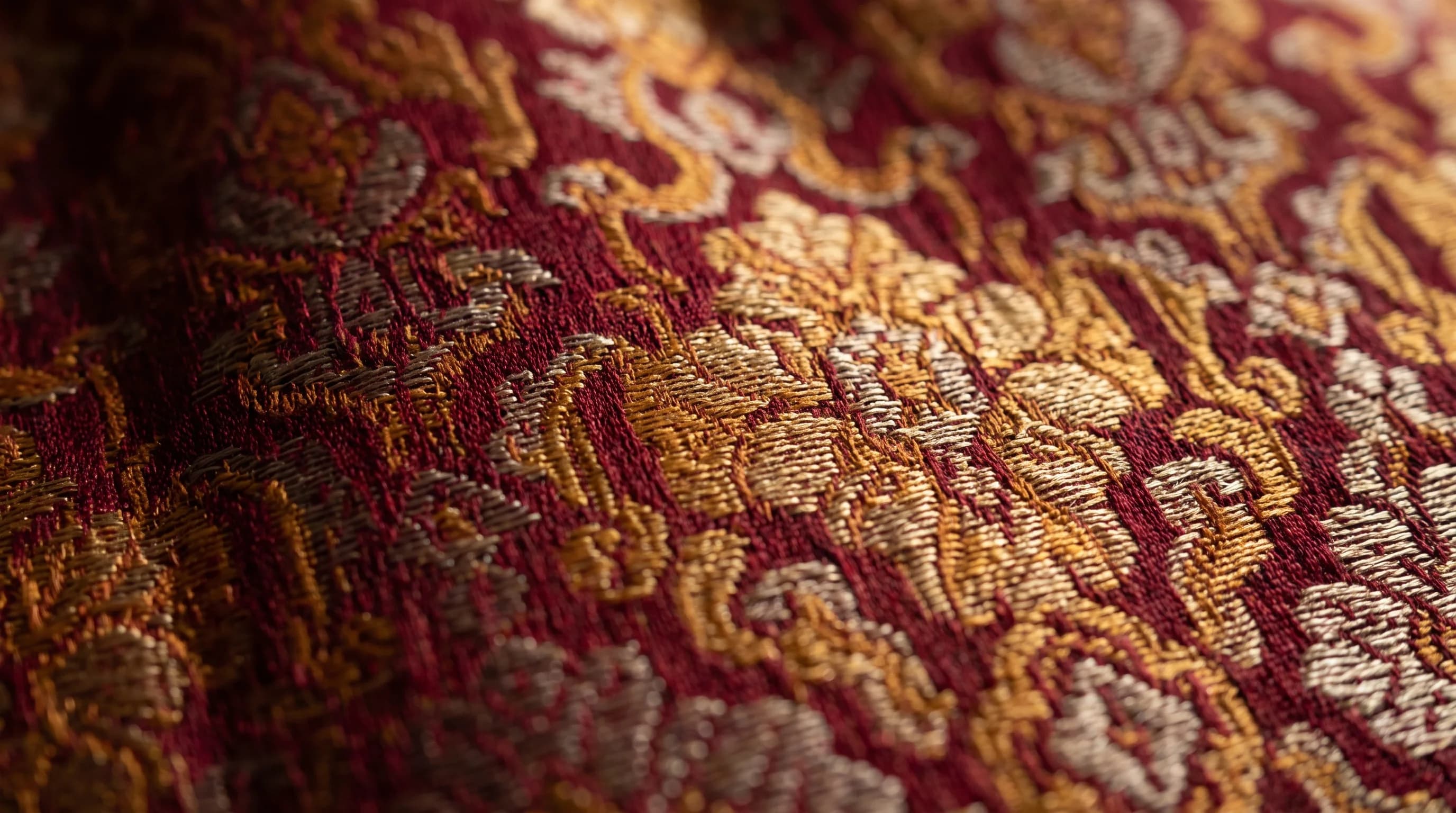
Kiras come in many materials, colours and patterns, and the price depends on the loom, the detail of the pattern and the quality of the thread. You'll soon recognise the everyday plaids, such as mathra and pangtse, worn to offices, cafés and temples.
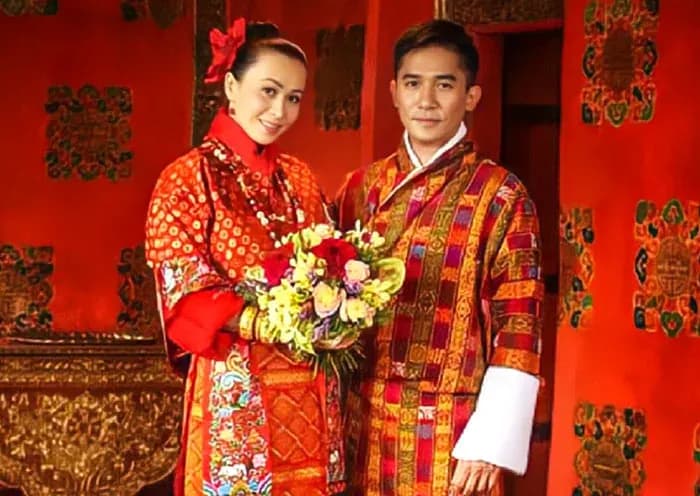
For weddings and festivals, women bring out brocade. The most prized is kishuthara, a silk kira covered in fine, many-coloured patterns, handwoven by weavers in eastern Bhutan over months of patient work. A good kishuthara is an investment, and families pass them down as heirlooms.
Kera and tego, the finishing touches
The kera is the woven belt that holds the kira in place, its long fringes tucked neatly into the folds. Over the top goes the tego, a short, long-sleeved jacket, usually in silk or brocade.
Footwear
Most women match their shoes to their kira. Heels, flats and boots are all fine, and it's up to the wearer, though more formal shoes are expected on official visits.
The gho: what Bhutanese men wear
Watch daily life for a while and you'll notice that although Bhutanese men all seem to wear the same thing, no two look exactly alike. Some wear plain charcoal ghos every day; others choose bold mathra checks in maroon and earthy tones. Men tend to prefer quieter colours, which contrast nicely with the brighter silks worn by women.
The gho is a loose, knee-length robe. It's hitched up and tied at the waist with a kera, and the fold above the belt makes an enormous pouch. Many of us call it the world's largest pocket. Ask a Bhutanese man what's inside his gho and you'll probably get a laugh: phone, wallet, papers, snacks and whatever else the day needs. Try one yourself and leave your bag at the hotel. The loose fit makes it practical for daily life, and men wear it to work, to meet friends and even on the farm.
Tego, the white inner shirt
Men also wear a tego, but theirs goes under the gho rather than over it, and it's always white. Its long sleeves are folded back over the sleeves of the gho to make the wide white cuffs you'll see everywhere.
Footwear
The gho is worn with knee-length socks and dress shoes, or trainers and sandals for a casual look. At festivals a few men wear tshoglham, traditional boots of cloth or leather embroidered with silk thread. At a Tshechu, watch for them crossing the stone courtyard of the dzong.
Kabney and rachu: the ceremonial scarves
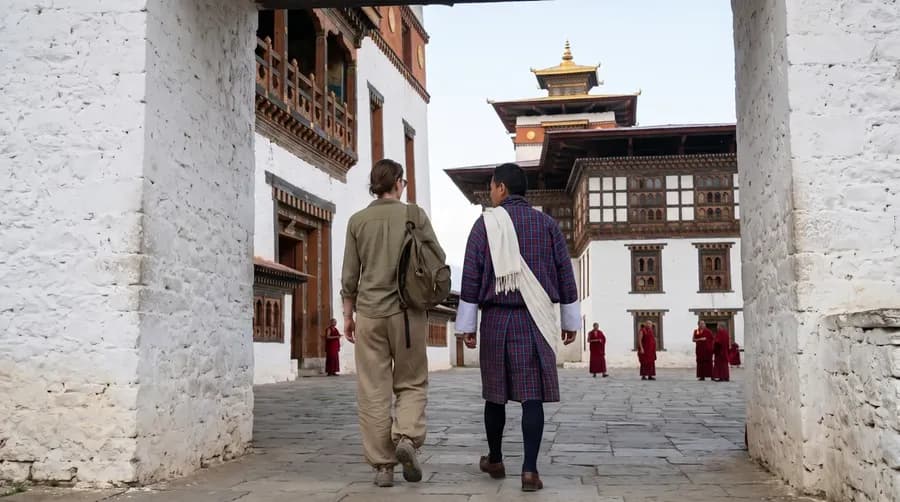
For visits to a dzong, official ceremonies and festivals, a ceremonial scarf goes over the national dress. You'll see Bhutanese people stop outside a dzong to arrange their scarves carefully before they walk in.
Men wear the kabney, a raw-silk scarf draped over the left shoulder. Its colour shows the wearer's role:
- White: ordinary citizens, and the one most people wear
- Yellow (saffron): only His Majesty the King and the Je Khenpo, the chief abbot
- Orange: ministers
- Blue: members of parliament
- Red: senior officials who hold the title Dasho
- Green: judges
Women wear the rachu, a long embroidered scarf folded in two over the left shoulder. The colours of rank are the same, except that ordinary women wear red. If you wear a gho for a dzong visit, a white kabney is the one to wear.
Can tourists wear the gho and kira?
Yes, and Bhutanese people love it when you do. Many of our guests wear a gho or kira to visit a dzong, watch a festival or have dinner with a family. A tailor in Thimphu can usually make a fitted outfit within a day, or you can buy one ready-made, and your guide will show you how to tie it, which is harder than it looks. A dress-up photo session in gho and kira is included in our tour packages.
You don't have to, though. Visitors can wear modest Western clothes everywhere. For what to wear and pack, see our Bhutan dress code and etiquette guide.
Where you'll see the gho and kira
Everywhere. Students wear them to school, civil servants to work, and families dress in their best for temple visits and festivals. The first person you meet in Bhutan, your guide, will be wearing one when they pick you up at the airport.
For the national dress at its most spectacular, come for a Tshechu. Courtyards fill with crimson brocade, green silk and gold thread as families gather in their finest. Check the dates in our festival calendar.
By the end of your trip you may find yourself recognising weaves without thinking about it: a mathra check in a café, a white kabney outside a monastery, a festival kira catching the afternoon sun. Our cultural tours visit the dzongs, monasteries and villages where you'll see them every day.
Read next
About the author
Pema · Itinerary designer & travel writer. Pema designs our itineraries and writes our travel guides. She plans each route so the drives, hikes, festival dates and quiet days fit together, and writes about Bhutan the way she'd explain it to a friend visiting for the first time.
Published